SURVEY GEOMETRY
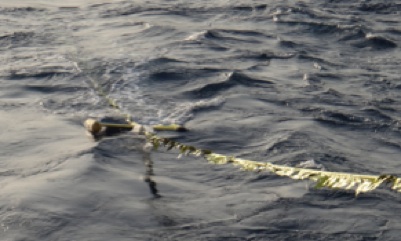
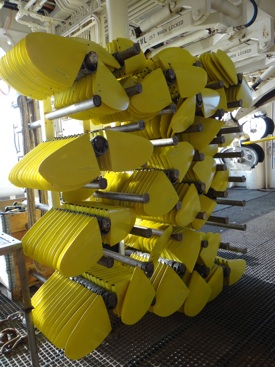
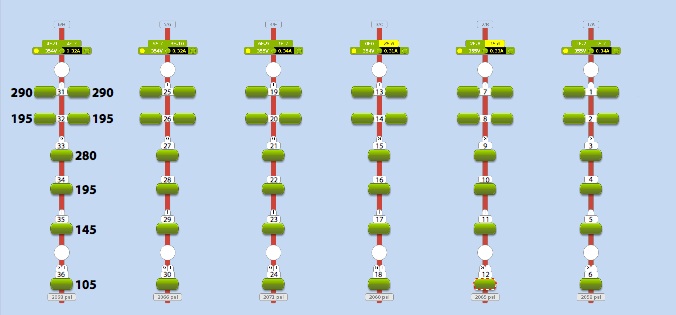
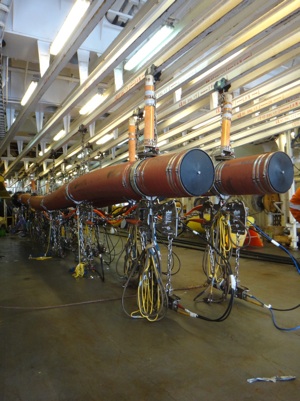
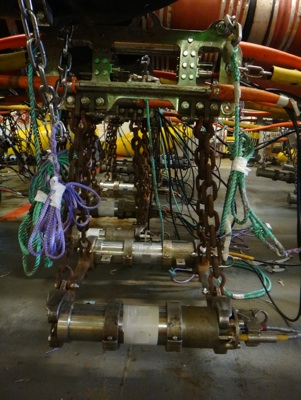
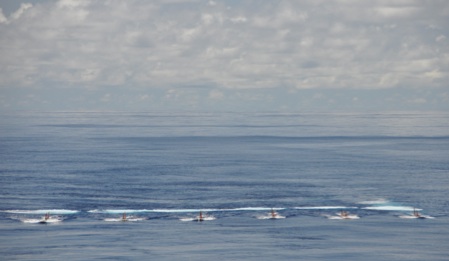
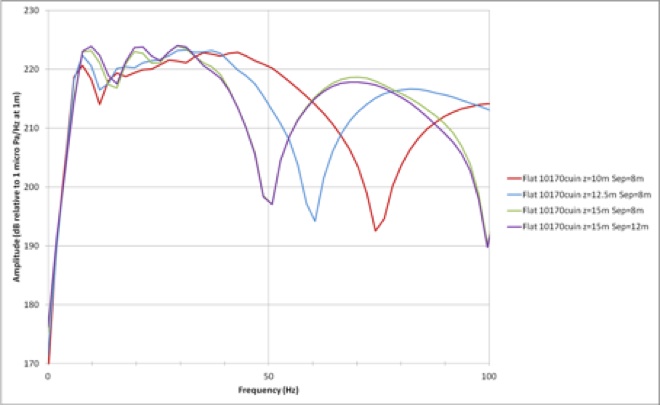
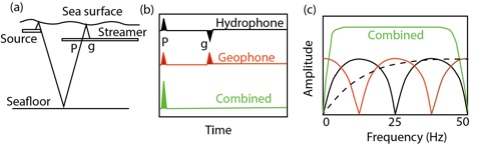
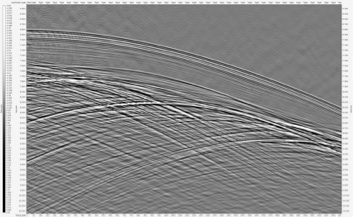
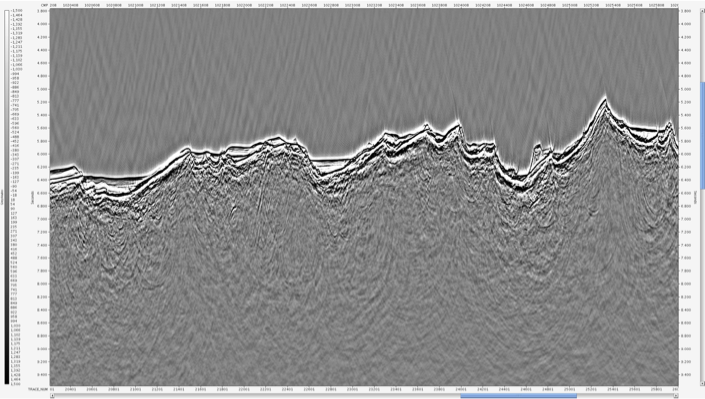
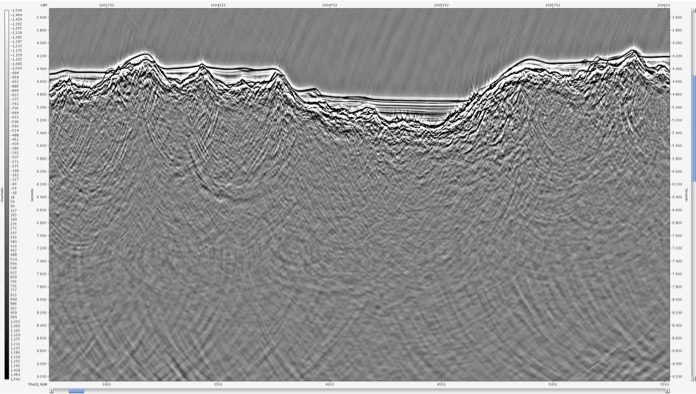
The ultra-deep reflection part of the TransAtlanticILab experiment took place in March-April 2015, on board the WesternGeco seismic vessel Western Trident. A 12 km long IsoMetrix streamer was deployed at 30 m water depth. The energy source was 10170 cubic inches, air-gun array comprised of 6 sub-arrays with 8 guns each, deployed at 15 m depth, providing very low frequency. The 12 km IsoMetrix streamer contained a pressure sensor and three-component accelerometer sensors at the same location. The shot interval varied from 50 m to 75 m, and consequently the record length from 20 s to 30 s, depending upon the target depth along the profile.
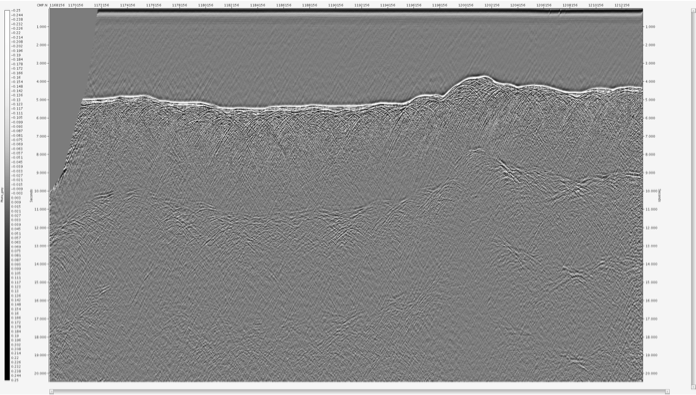
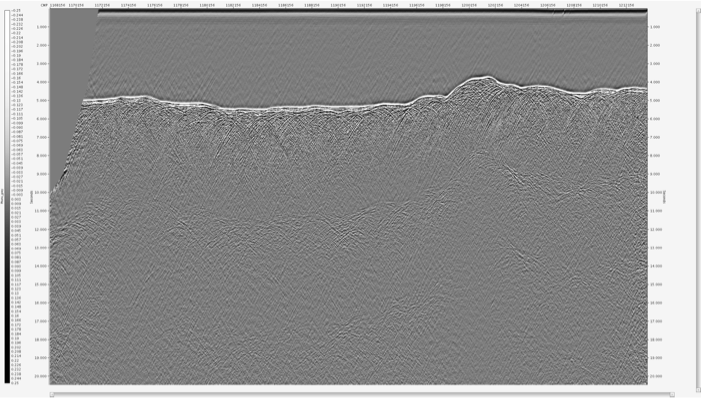
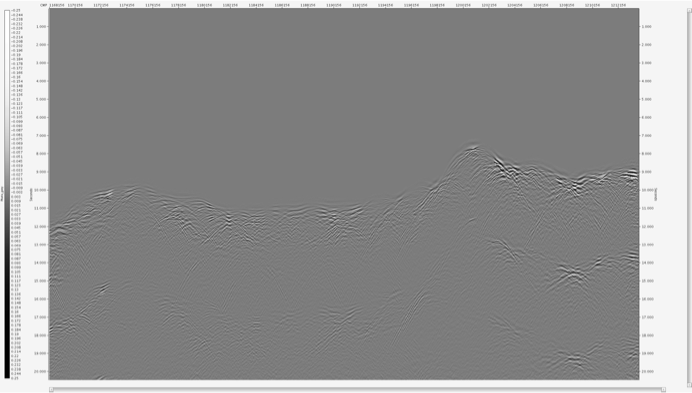
A total of 2775 km ultra-deep seismic reflection data was acquired starting from Greenwich Meridian at 1º S, at about 75 Ma of oceanic lithosphere (Figure 2) in nearly E-W direction, crossing the Mid-Atlantic Ridge at 1.3º S, corresponding to zero age of the lithosphere. This part of the profile spans 0-75 Ma of the oceanic lithosphere on the African Plate. The profile extends ~500 km west of the Mid-Atlantic Ridge and transects 0-25 Ma of the oceanic lithosphere on the South American Plate.
This E-W profile is connected with an N-S profile that traverses the Chain Fracture Zone, Romanche Transform Fault and St Paul Fracture Zone. These fracture zones are responsible for the shape of Equatorial Africa and Brazil and the 2000 km E-W coastline along the Equatorial Africa.
The age contrast across the Chain Facture Zone is about 15 Ma, i.e. an offset 300 km; across the Romanche Transform Fault the age contrast is 45 Ma, with an offset of 900 km, and across St. Paul it is 35 Ma with an offset of 700 km. The Romanche transform fault is largest transform fault on Earth and has hosted series of large earthquakes, including the 1994 Mw=7.1 earthquake. It is ~40 km wide, and consists of a deep valley reaching to a water depth of 6200 m along our profile, bounded by ridges that rise up to 1700 m below the sea surface.
Being in the equatorial region, barnacle growth on the streamer and strong current were two major problems. The barnacle growth created noise on acceleration data and increased the tension on the streamer, slowing down the vessel speed. The streamer needed to be cleaned twice during the16 days of acquisition. Since the streamer was towed at 30 m, the current at this depth was often in the opposite sense to that on the surface, usually much stronger, further reducing the speed, some times down to 3 knots.