
Citizen / General public
Researcher
Student / Future student
Company
Public partner
Journalist
Teacher / Pupil

Landing of InSight probe

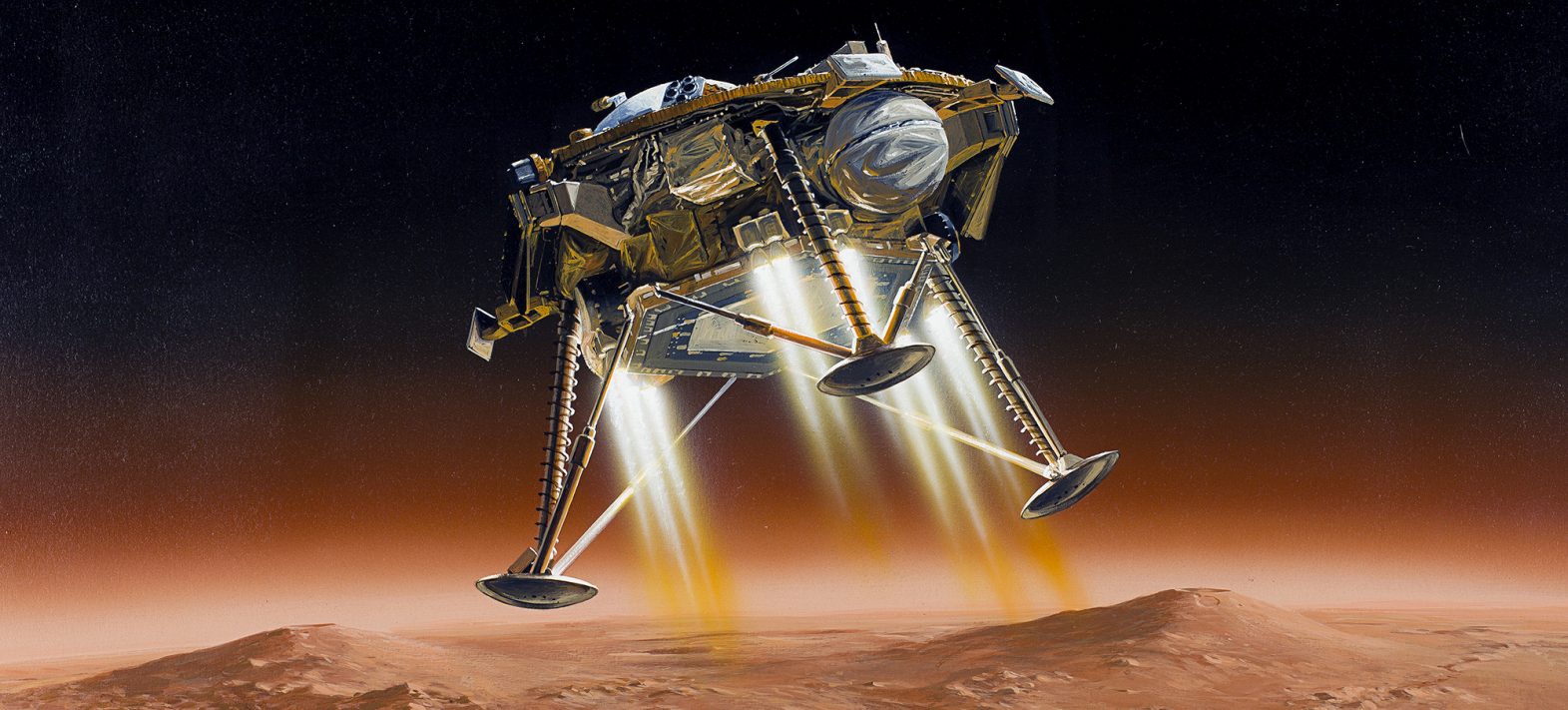
After years of research, months of fine-tuning, thousands of working hours, a journey of 485 million kilometers, and "7 minutes of terror", the InSight probe, the fruit of international collaboration and carrying the SEIS seismometer designed at IPGP, landed on Mars on Monday, November 26th, 2018.
Landing of InSight probe

Artist's view of the InSight landing on Mars. IPGP - Manchu - Agence 21

Publication date: 16/11/2018

Observatories, Press

Related observatories : InSight Observatory

The 12th mission in NASA’s Discovery programme, InSight aims to study the internal structure of Mars and to understand the formation and evolution of the rocky planets in the Solar System.

Its scientific objective is to better understand the internal structure of Mars, how the planet formed and how it evolved to become the icy desert it is today. Using sophisticated geophysical instruments never before used on Mars, InSight will measure the Red Planet’s seismic activity, its internal heat flow and the subtle variations in its rotation speed.

The SEIS seismometer is the mission’s central instrument. The IPGP is in charge of the scientific aspects, under the supervision of CNES. The InSight-IPGP team of engineers and researchers designed and tested the VBB (Very Broad Band) sensors. The aim of SEIS is to analyse Mars’ ‘tremors’ and meteorite impacts in order to visualise its interior.

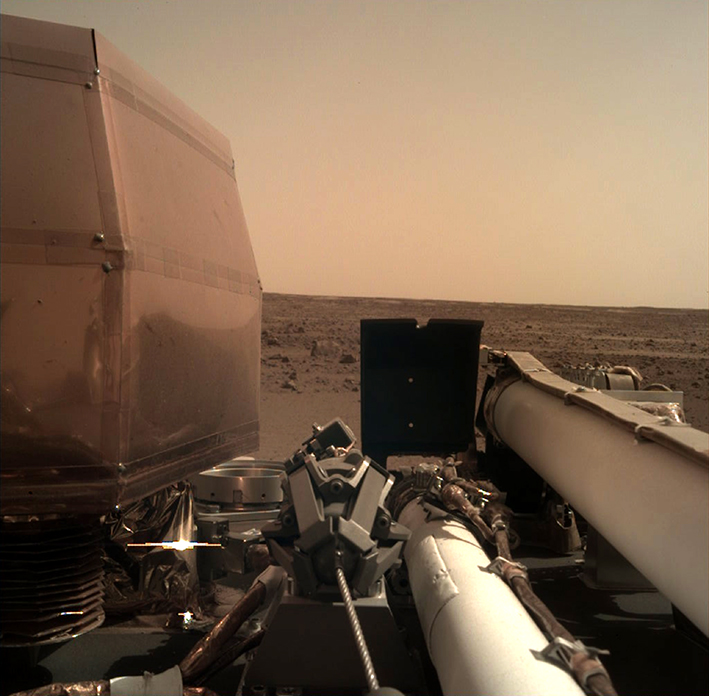
First photo of NASA's InSight probe on Mars! NASA - InSight
Latest news
Tribute from the Institut de Physique du Globe de Paris to Dr. Miguel Eduardo Bosch Blumenfeld (1959–2026)
The Institut de Physique du Globe de Paris pays tribute to Dr. Miguel Eduardo Bosch Blumenfeld, an esteemed geophysicist and distinguished alumnus of ...
From the first solids of the Solar System to planets: the decisive role of extreme and violent cooling
How do the first solid materials that give rise to planets emerge from the incandescent gas surrounding a young star? This transition from gas to soli...
Laëtitia Pantobe has been awarded the 2026 Thesis Prize by the French National Committee for Geodesy and Geophysics (CNFGG).
Laëtitia Pantobe, a PhD student in the Volcanic Systems team, successfully defended her thesis, "Identification and modelling of the physical processe...
Guillaume Avice: CNRS bronze medal for his work on noble gases in the atmospheres of terrestrial planets
Guillaume Avice, a geochemist and cosmochemist, is a research fellow at the IPGP (CNRS/IPGP/University of Paris Cité). He uses mass spectrometry to st...