Citizen / General public
Researcher
Student / Future student
Company
Public partner
Journalist
Teacher / Pupil

” Les Mondes de Saturne ” awarded by the Ciel & Espace prize for the best astronomy book 2023

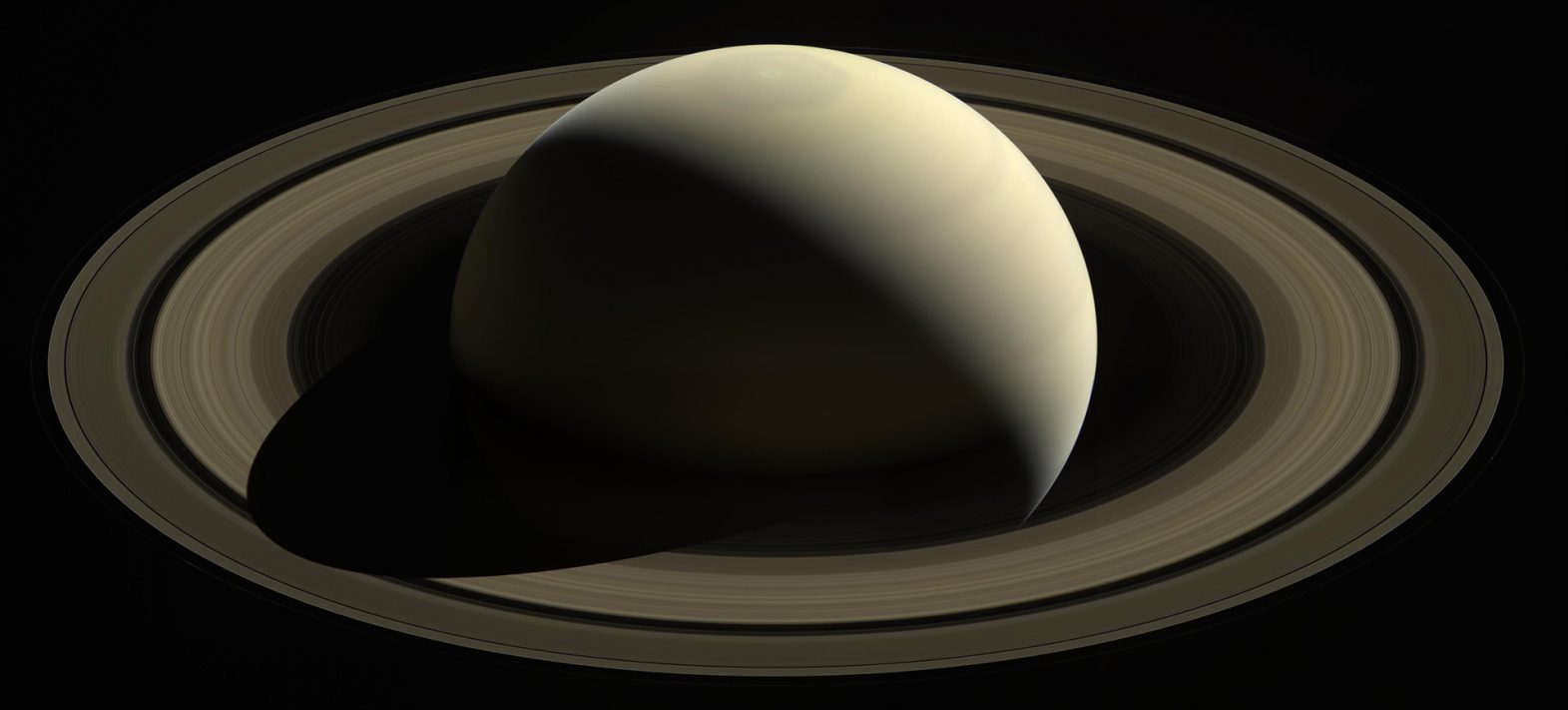
The Ciel & Espace prize for astronomy books goes this year to Alice Le Gall, Sandrine Guerlet, Sandrine Vinatier and Sébastien Charnoz for "Les mondes de Saturne" (Saturn's worlds), a synthesis of the fantastic Cassini-Huygens mission around the ringed planet (2004-2017).
” Les Mondes de Saturne ” awarded by the Ciel & Espace prize for the best astronomy book 2023

Publication date: 11/04/2023

Awards and Distinctions, General public, Press, Research

Saturn is made up of many spectacular worlds that were explored at length by the Cassini-Huygens mission between 2004 and 2017. In seven thematic chapters, ” Les mondes de Saturne ” takes us 1.5 billion km from Earth to discover the secrets of the atmosphere of this giant planet, its famous rings and the myriad moons that surround it – with a special focus on the largest and most surprising of them: Titan. The book is updated with the latest scientific findings and knowledge, and is illustrated with explanatory diagrams and beautiful photographs. The four authors, all former members of the Cassini-Huygens mission, tell us about the genesis of this formidable space mission and the future of exploration of the Saturnian system.

Livre "Les mondes de Saturne"

About Sébastien Charnoz, co-author of the book and member of the IPGP

Sébastien Charnoz is a professor at Université Paris Cité and member of the Cosmochemistry, Astrophysics and Experimental Geophysics team at the IPGP. He is a specialist in planetary formation and solar system exploration. He was a member of the Cassini mission imaging team from 2001 to 2017. He continues to explore the Solar System through the international missions MMX (Japanese mission to bring back a sample from Phobos, a satellite of Mars) and Hera (European mission to a near-Earth double asteroid).

Latest news
What can the light from Vesta’s avalanches tell us?
A study conducted at the Institut de Physique du Globe de Paris uses images from NASA’s Dawn mission and a Bayesian inversion of the Hapke photometric...
Cosmochemistry in the service of Alzheimer's disease diagnosis: copper reveals its isotopic secrets
A multidisciplinary study led by researchers at the Institut de Physique du Globe de Paris (IPGP), in collaboration with teams from the Faculty of Hea...
Are the hidden currents of Ganymede’s ocean finally detectable?
A study conducted by researchers from the Institut de physique du globe de Paris (IPGP) and CNRS shows that the convection motions driving the hidden ...
Discovery of CO₂ hydrates off the coast of Mayotte: a unique site for studying carbon storage in the ocean
More than 120 CO₂ hydrate deposits were discovered at the Fer à Cheval site, 10 km east of Petite Terre (Mayotte), during the Geoflamme campaign co-le...