




Numerical modelling and petrological analyses of phreatic eruptions of Copahue Volcano (Argentina/Chile)
Start: 01 October 2025
End: 30 September 2028
Supervisors :
Fidel Costa, Marina Rosas-Carbajal
Related teams :
Volcanic Systems
Status: In progress
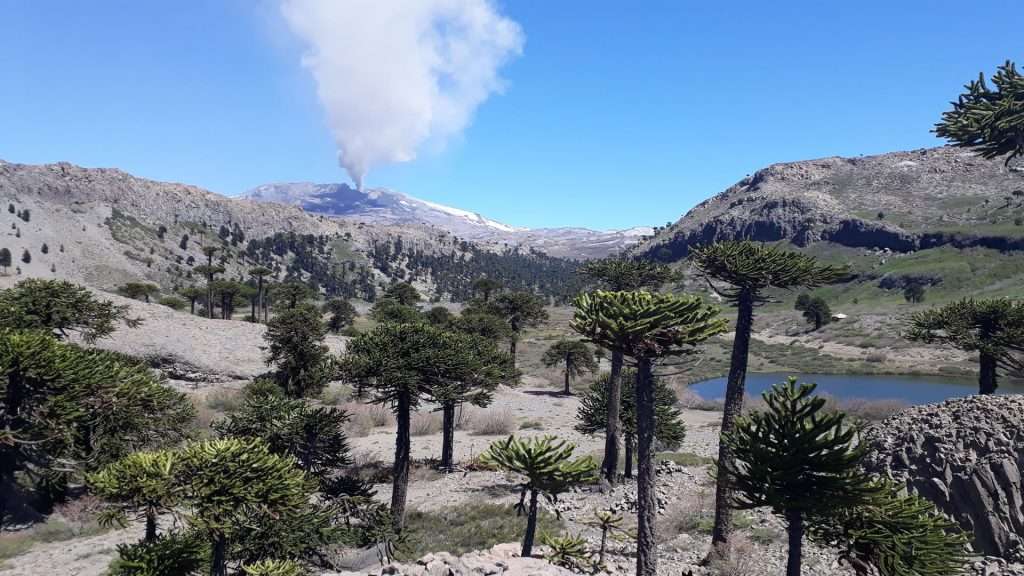
Copahue is an active andesitic-basaltic stratovolcano located on the border between Argentina and Chile, in the Southern Volcanic Zone of the Andes. It is one of the most active volcanoes in Patagonia and is considered the highest volcanic risk in Argentina due to its persistent activity and the proximity of the towns of Caviahue and Copahue, as well as a large influx of tourists.
The volcano hosts an active crater with an acidic lake and exhibits recurrent phreatic and phreatomagmatic eruptions. Interestingly, eruptions happen mostly during the cold season, when the crater lake is low. Scientists think climate factors like rain and snowmelt may control this activity by changing the lake level and chemistry, which can lead to pressure building up inside the volcano.
This PhD is part of the COPHRE project (Characterizing and modelling the Onset of recurrent PHREatic eruptions), led by Dr. Marina Rosas-Carbaj. The goal of the thesis is to answer two main questions
Are the recurrent eruptions observed in Copahue purely phreatic, or is there juvenile magma involved? Does the type of ejected material evolve in time? In order to answer this, a petrological analysis will be conducted on ashes from different eruptions.
Does a seasonal variation of the external forcing in a volcano hydrothermal system influence the volcano’s eruptive activity? The aim is to perform numerical modelling to understand fluid and heat flow in the volcano’s hydrothermal system. The goal of this is to comprehend whether seasonal changes (like rain and lake size), sealing of the system, or variations in magmatic fluids trigger the repeated eruptions.