
Citoyen / Grand public
Chercheur
Étudiant / Futur étudiant
Entreprise
Partenaire public
Journaliste
Enseignant / Elève

GRAAL Expedition

L'Expédition GRAAL : Glacier Research and Aerosol Analysis in Greenland for Advancing Limites est coportée par Yann Sivry à l'Institut de Physique du Globe de Paris - Université Paris Cité et par Serge Aviotte de l'Association Spélé'Ice Exploration.
GRAAL Expedition

Début : 01/09/2024 - Fin : 31/12/2026

Coordinateurs : Yann Sivry, Serge Aviotte

Établissements porteurs :
IPGP, Institut de Physique du Globe de Paris

Établissements partenaires :
Association Spélé'Ice Exploration


STUDY OF NANOPARTICLES IN GREENLAND’S GLACIERS

Nanoparticles: Great Travelers

For a long time, climatic and geological phenomena were the primary drivers of transformations on Earth’s surface. In the Anthropocene era, global changes caused by human activity are now the predominant forces shaping natural environments.
In this context, the study of the biogeochemical cycles of metallic elements and their evolution under human influence has become a growing focus for scientists.

Metallic contaminants are sometimes emitted into the air, water, and soils in nanoparticulate form through natural processes (volcanic activity, erosion) or human activities (traffic emissions, fossil fuel combustion, mining operations, metal refining, asbestos, and lead). It has already been demonstrated that these activities produce nanoparticles capable of traveling great distances.

On a global scale, human sources of nanoparticles contribute to the global cycles of toxic elements. However, the proportions, origins, and temporal evolution of these contributions remain largely unknown due to the challenges of tracking them.

Greenland: An Ideal Experimental Site

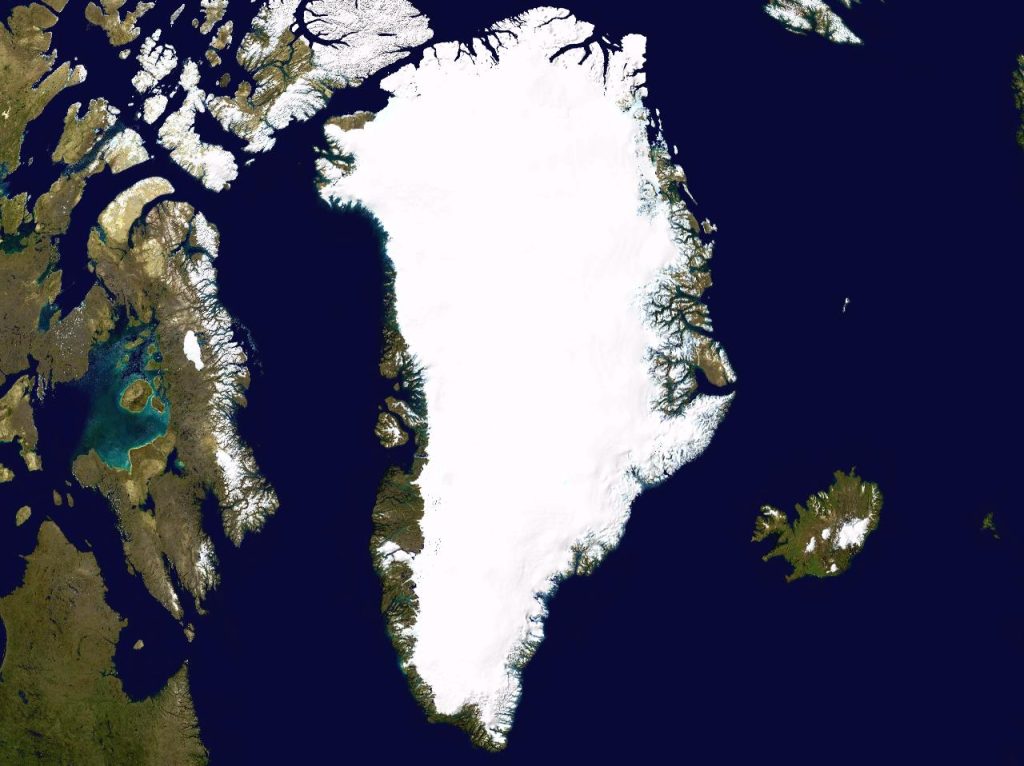
From GoogleEarth

The GRAAL expedition aims to overcome this challenge by distinguishing between geogenic (natural) and anthropogenic (human-produced) nanoparticles transported atmospherically and accumulated in Greenland’s ice, in regions thought to be remote and pristine.

The expedition took place in Greenland, home to the only ice sheet (polar cap) in the Northern Hemisphere and uniquely situated equidistant between the European megacities (London–Milan axis) and the North American megalopolis (BosWash corridor, Boston–Washington).

The new knowledge gained through this project will be crucial not only for studying and understanding human impacts on major natural cycles but also for informing and protecting the public regarding nanoparticle sources. In the long term, these findings could support regulations and laws aimed at mitigating human emissions of particles.

Moulin Ice Caves: A Unique Sampling Opportunity

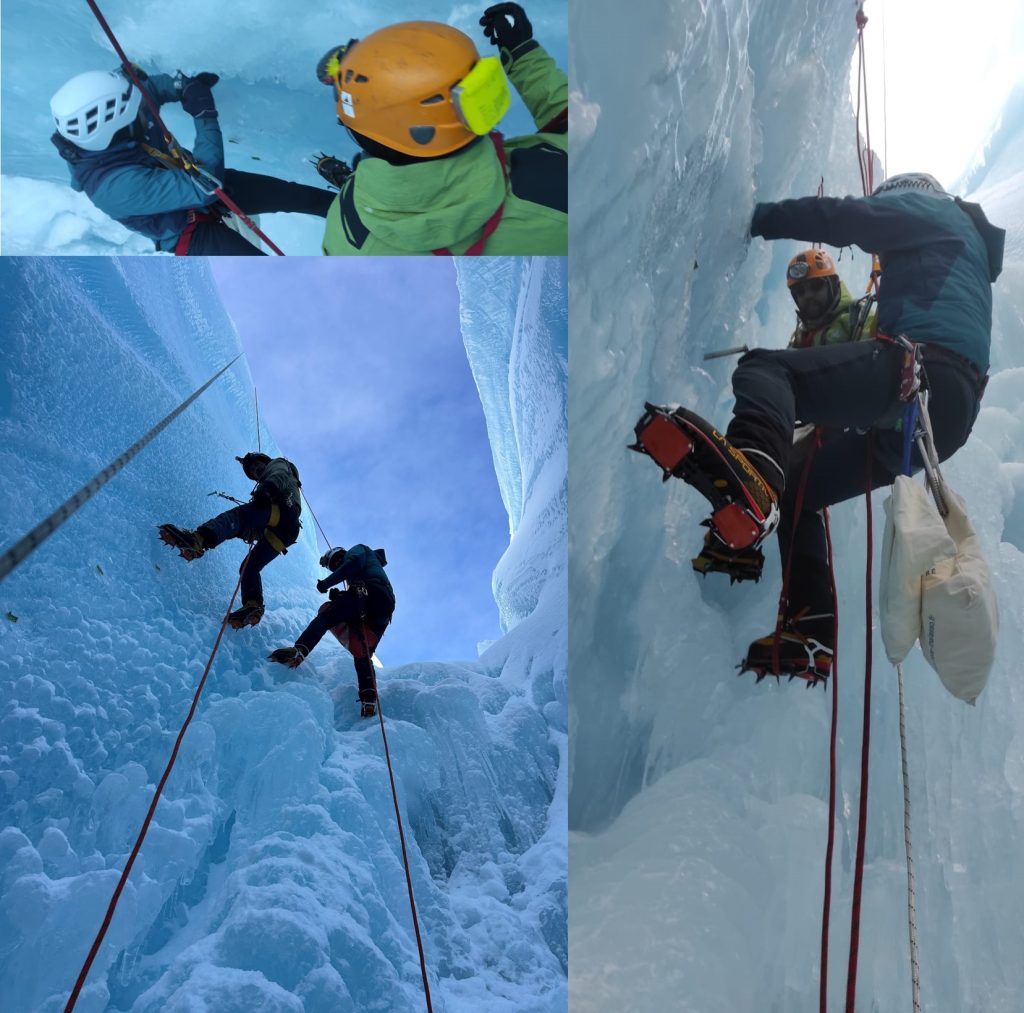
This mission allowed scientists to collect samples of ice at various depths, as well as meltwater and sediments, to determine the chemical and isotopic composition (variations in atomic mass of the same element) of nanoparticles deposited over time in successive ice layers. The goal is to link this composition to natural or human sources following atmospheric transport and deposition (via snow, rain, wind).

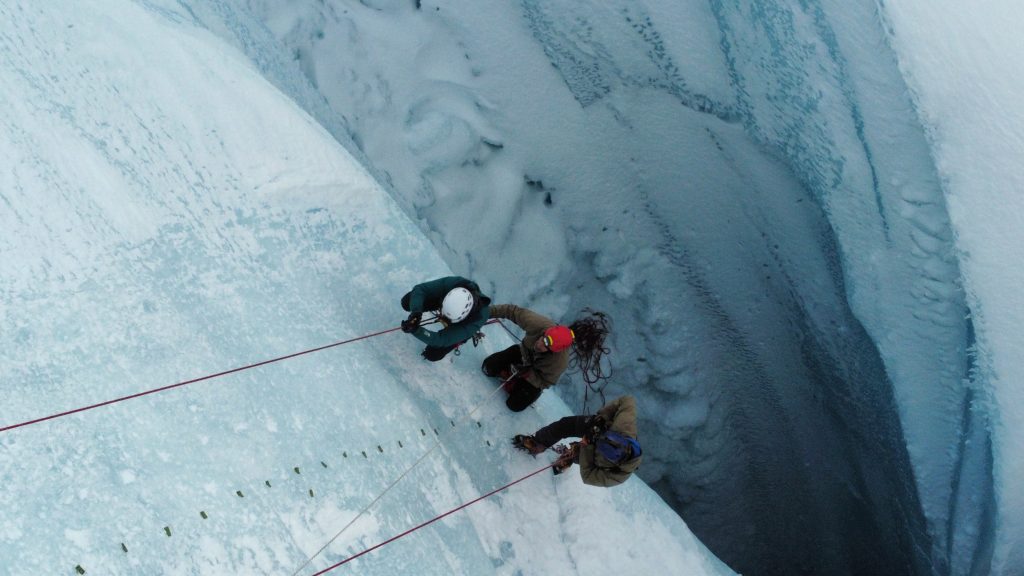
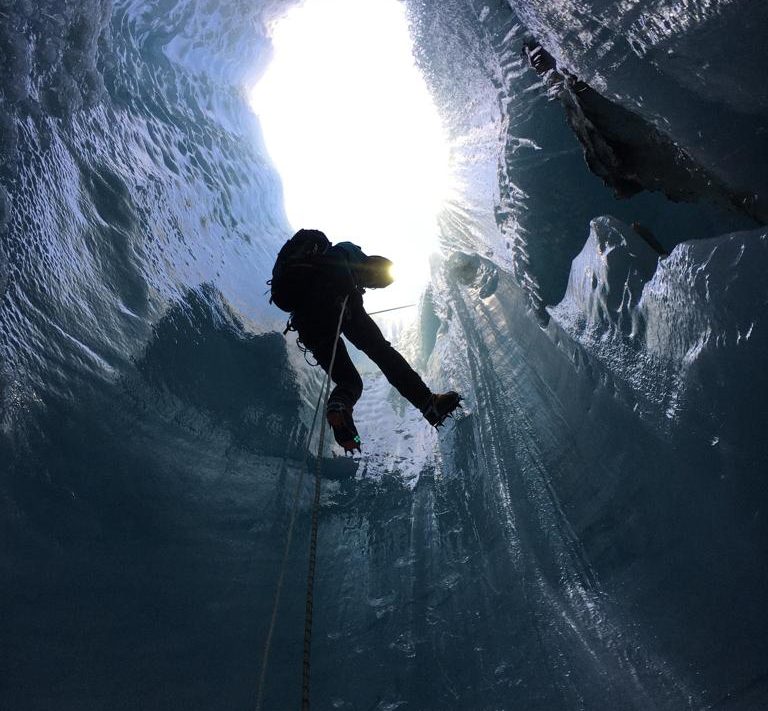
Unlike traditional scientific expeditions where samples are taken from the surface down, researchers have descended directly into “moulins”—crevasses widened by meltwater—with the assistance of speleologists and high-altitude guides. Small horizontal cores, 20 cm in length, will then be extracted to access the different ice layers.

With the courtesy of Farouk Kadded - Leica Geosystems part of Hexagon

Moulins: A Unique Subject of Study in Glaciology

Recent boreholes in the target exploration area provide a valuable point of comparison with these vertical, deep cavities. This comparison is essential for establishing correlations regarding glacial stratifications, basal water levels, and ancient cryoconite deposits (dark-colored fine particles that accelerate surface melting).

During the exploration of moulins and contact cavities, several parallel studies where conducted. These include measuring the piezometric level of meltwater and recording basal water pressure variations throughout the expedition. A complex but critical objective is dating the different ice layers within the glacial moulins. The team will also use 3D scanners to quantify cavity volumes and study their evolution over time.

Practical Details of the Expedition

GRAAL takes place on the ice cap approximately 70 km east of Kangerlussuaq, an area well-suited for the formation of glacial moulins.
The expedition is scheduled for autumn 2025, when summer meltwaters have receded, leaving dry and accessible streambeds and moulins before snowfall blankets the ice cap and obscures them.

With the courtesy of Lionel Blain

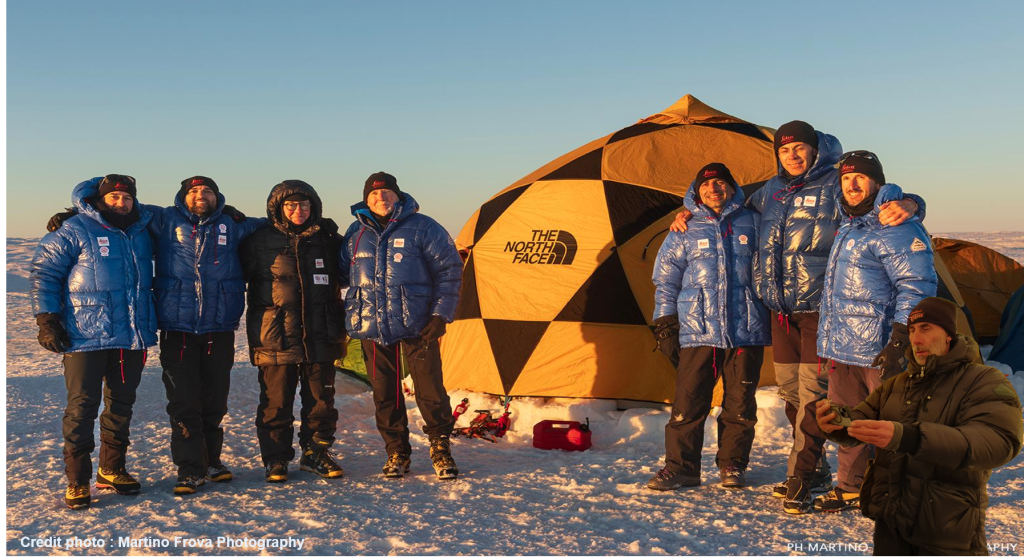
Led by Serge AVIOTTE, Expedition Leader of the Spélé’Ice Exploration Association, and inspired by the polar expeditions of French explorer and ethnologist Paul-Émile VICTOR, the team, spearheaded by Yann SIVRY, will include scientists from the Institut de Physique du Globe de Paris – Université Paris Cité, glacial speleologists (glacionauts), and a filmmaker from the French and Italian associations “Spélé’Ice Exploration” and “InsidetheGlaciers.”

The Exploration Phase

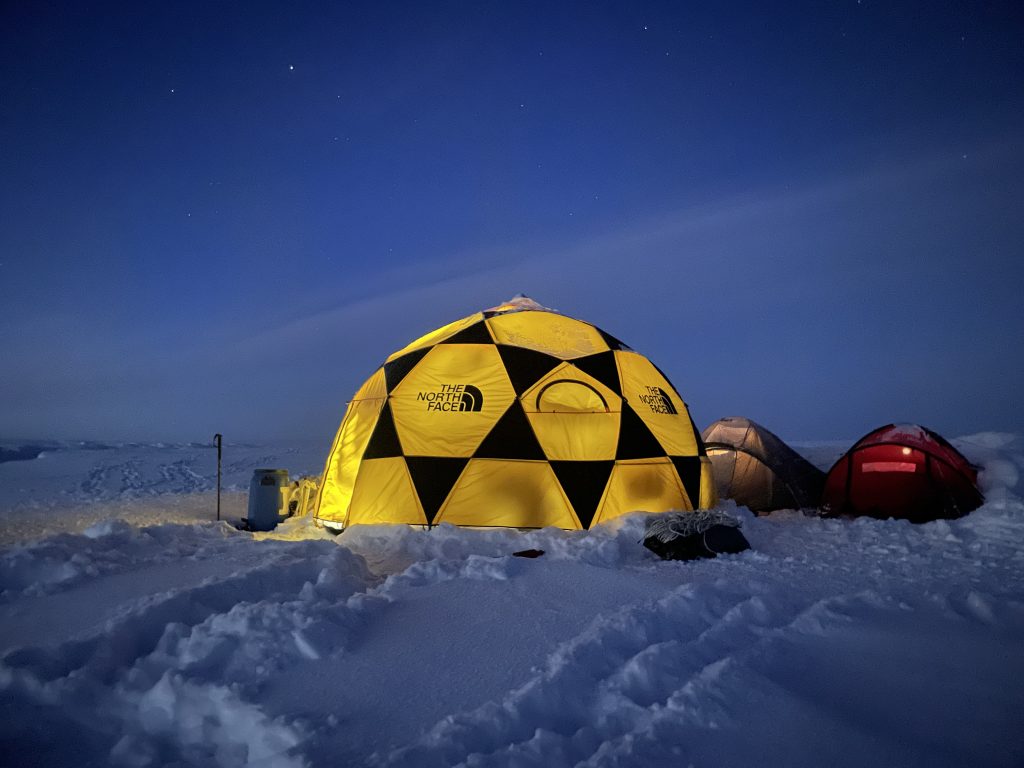
From Kangerlussuaq, researchers reached the expedition zone by helicopter, which also transported the ton of equipment needed to establish a base camp for one week, explore the discovered cavities, and conduct scientific studies in the field.

With the courtesy of Lionel Blain and Farouk Kadded - Leica Geosystems part of Hexagon

Reconstruction of the mill explored using 3D dynamic scanners of  Leica Geosystems part of Hexagon  => BLK2GO and => BLK360

The Analysis Phase

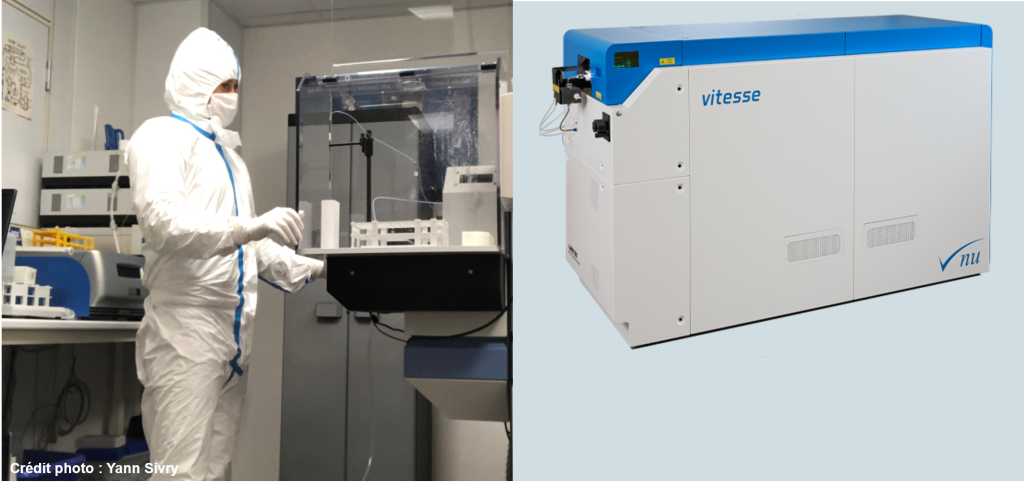
The samples will be analyzed at the IPGP using some of the most advanced innovative tools, including plasma-source mass spectrometry in single-particle mode (spICP-ToF-MS) for nanoparticle measurement or multi-collection mode (MC-ICP-MS) for stable isotope analysis, as well as asymmetric flow field-flow fractionation (A4F).

With the courtesy of Yann Sivry and Nu Instruments

This project is not only one of the first studies dedicated to distinguishing between anthropogenic and geogenic nanoparticles in environmental systems but also the first to combine these three cutting-edge tools to understand, quantify, and predict the fate of nanoparticles on a large scale.

The team members

  • Yann Sivry (scientifique)
  • Serge Aviotte (glacionaute, président de Spélé’Ice Exploration)
  • Mickaël Tharaud (scientifique)
  • Lionel Blain (glacionaute)
  • Hervé Gherardi (glacionaute)
  • Joël Ducros (logisticien)
  • Farouk Kadded (géomètre)
  • Philippe Keledjian (médecin, logisticien)
  • Martino Frova (caméraman, réalisateur)

The sponsors

  • Fondation Université Paris Cité
  • Pyrenex
  • Leica Geosystems part of Hexagon
  • Trenitalia France
  • CIC
  • L’Entrepôt du Bricolage
  • TEC6
  • The North Face
  • Intersport
A lire aussi
Biogeochemistry at the Antropocene of Elements and Emerging Contaminants
 STUDY OF NANOPARTICLES IN GREENLAND’S GLACIERSNanoparticles: Great TravelersFor a long time, cl...
Biogéochimie à l'Anthropocène des éléments et contaminants émergents
 STUDY OF NANOPARTICLES IN GREENLAND’S GLACIERSNanoparticles: Great TravelersFor a long time, cl...
Earth System Science
Measuring, understanding and modelling the functioning of our planet's surface, also called the Critical Zone.
Système Terre
Système Terre
Mesure, compréhension et modélisation du fonctionnement de la surface de notre planète, aussi appelée Zone critique.