

Intraplate deformation and crustal thickness variations in the 2012 earthquake rupture zones in the Wharton Basin, Indian Ocean
26/11/2026
IPGP - Îlot Cuvier
14:00
Soutenances de thèses
Amphithéâtre
Saksham Rohilla
Géosciences marines (LGM)
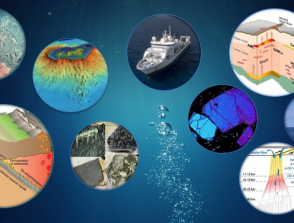
Most of the deformation on Earth is concentrated along tectonic plate boundaries, namely, the divergent, the convergent, and transform plate boundaries. The Indian Ocean, however, presents a unique setting with a zone of diffused deformation spanning ~7 million km2 within the composite Indo-Australian plate. This region hosted the great 2012 Wharton Basin twin strike-slip earthquakes (Mw 8.6 and 8.2) offshore northern Sumatra. Their exceptional magnitudes and fault plane solutions showed significant intraplate strain localisation along a complex network of faults at high angle to each other. However, the remote location of the earthquake epicentres and the absence of direct seafloor observations initially left their rupture geometries poorly constrained. In addition to hosting intraplate deformation, the Wharton Basin is also a site of strong crustal thickness variations and contains the thinnest known fast-spreading oceanic crust (~3.5 km). However, the lack of regional studies makes it difficult to assess the spatial extent and possible tectono-magmatic origin of these variations. To address these challenges, the MIRAGE experiments acquired a comprehensive suite of geophysical data in the Wharton Basin, including ~90,000 km2 of bathymetry and 12 seismic reflection profiles totalling 3,450 km in length, intersecting two IODP borehole sites. The objectives of this thesis are to: (1) investigate the crustal thickness variations in the Wharton Basin, and (2) assess intraplate deformation in the context of the 2012 earthquakes.
Our analysis of crustal thickness in the region showed that the variations are more pervasive than previously thought and occur at different temporal scales. We infer a long-term decrease in crustal thickness from ~5 km at ~66 Ma to ~3.5 km at ~50 Ma. This decrease in crustal thickness is associated in part with the reduction of the India-Australia half spreading rates from ~110 mm/yr to 50 – 70 mm/yr. Interestingly, superimposed on this regional trend is a transient thinned crust (~4 km) between 64 and 65 Ma. This anomaly coincides with abrupt changes in spreading rate, magnetic anomaly orientation, and plate reorganisation associated with the India–Seychelles breakup. We propose that short-lived changes in spreading kinematics temporarily reduced melt supply to the ridge axis, producing localised crustal thinning.
Our analysis of the intraplate deformation revealed a WNW-trending ~170 km long, right-lateral fault that ruptured as part of the Mw 8.6 event, causing a significant coseismic stress transfer towards the epicentre of the Mw 8.2 event. We also discovered that part of the rupture of the Mw 8.6 event reactivated faults that were structurally inherited from an intraoceanic rift. This intraoceanic rift likely initiated across a transform fault during the plate reorganisation event at ~65 Ma. We also find that the resulting oblique spreading also generated an oblique oceanic fabric that is now being reactivated by reverse faulting, accommodating active shortening in the Wharton Basin. Finally, results from discrete element modelling revealed the temporal evolution of the complex shear zone system in the Wharton Basin, consistent with the observations. We also find that the reactivation of the fracture zones puts a first-order control on the location, segmentation, and cumulative displacement of younger shear zones.Overall, this thesis demonstrates that the downgoing Indian Ocean lithosphere at the Sunda subduction zone is characterised by significant spatial heterogeneity in crustal thickness and deformation style. These heterogeneities would be crucial for understanding the along-strike and along-dip variations in the behaviour of the Sunda subduction system.