
Citizen / General public
Researcher
Student / Future student
Company
Public partner
Journalist
Teacher / Pupil

A unique iron isotope anomaly to identify fossil magnetotactic bacteria
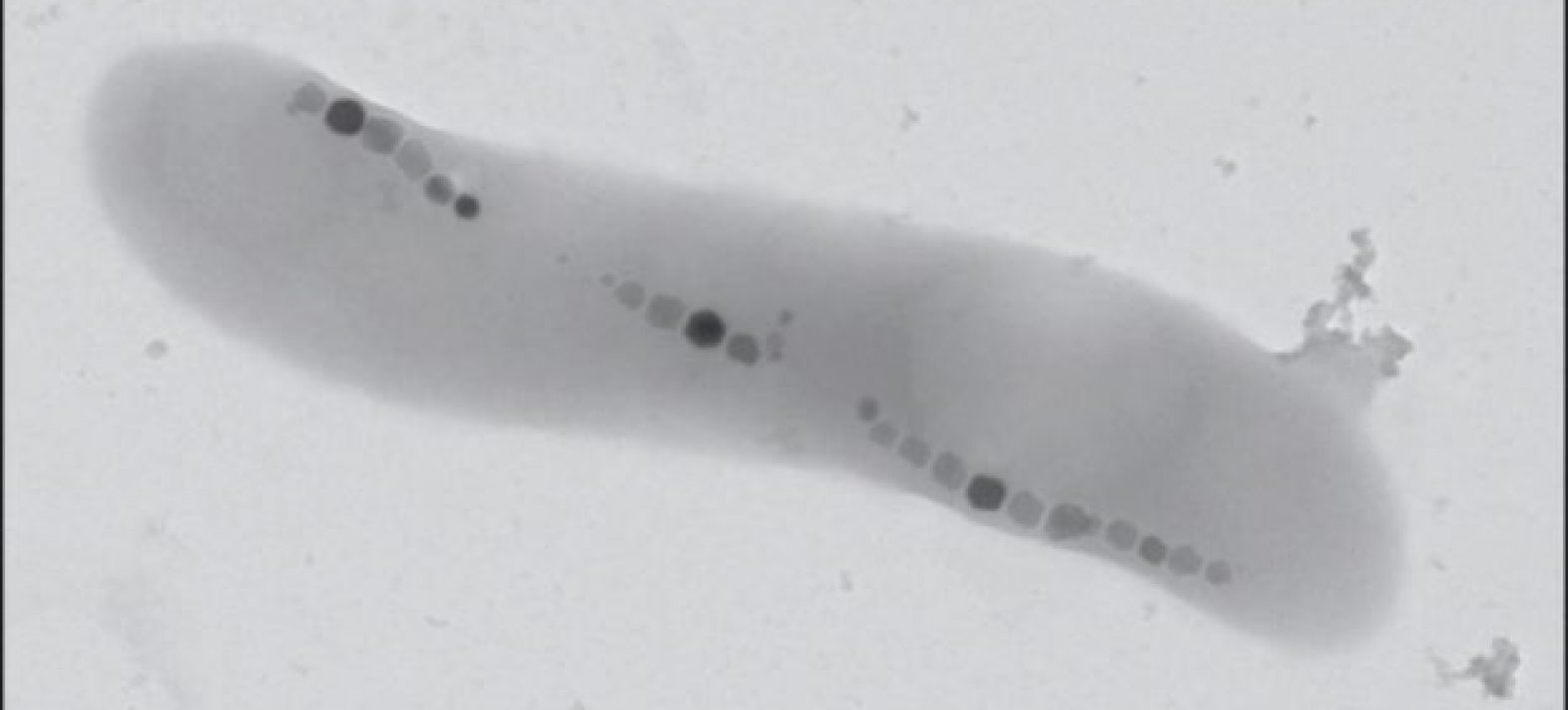
A unique iron isotope anomaly to identify fossil magnetotactic bacteria

Magnetotactic Bacteria

Publication date: 06/05/2016

Press, Research

Related teams :
Stable Isotope Geochemistry

Related themes : Origins

Researchers at the IPGP, in collaboration with colleagues at the Institut de Minéralogie, de Physique des Matériaux et de Cosmochimie (IMPMC), and the Nanobactérie company, have discovered an iron isotope anomaly in crystals of magnetites synthesised by magnetotactic bacteria. This isotopic anomaly appears to be specific to these bacteria and should help to identify their fossils in ancient terrestrial and extraterrestrial rocks. This work was published in the journal Science.

Latest news
Cosmochemistry in the service of Alzheimer's disease diagnosis: copper reveals its isotopic secrets
A multidisciplinary study led by researchers at the Institut de Physique du Globe de Paris (IPGP), in collaboration with teams from the Faculty of Hea...
Are the hidden currents of Ganymede’s ocean finally detectable?
A study conducted by researchers from the Institut de physique du globe de Paris (IPGP) and CNRS shows that the convection motions driving the hidden ...
Discovery of CO₂ hydrates off the coast of Mayotte: a unique site for studying carbon storage in the ocean
More than 120 CO₂ hydrate deposits were discovered at the Fer à Cheval site, 10 km east of Petite Terre (Mayotte), during the Geoflamme campaign co-le...
Publication of the IPGP 2025 Annual Report
The IPGP Annual Report, published in both French and English, aims to share with the widest possible audience our enthusiasm for the research carried ...