
Citizen / General public
Researcher
Student / Future student
Company
Public partner
Journalist
Teacher / Pupil

Periodic coastal uplift in a subduction context

Topography in subduction zones is commonly seen as the consequence of tectonic processes occurring at the plate interface where mega-earthquakes such as the one in Sumatra (2004) or Tohoku (Japan, 2011) take place.

Periodic coastal uplift in a subduction context

Publication date: 04/05/2020

Press, Research

Topography in subduction zones is commonly seen as the consequence of tectonic processes occurring at the plate interface where mega-earthquakes such as the one in Sumatra (2004) or Tohoku (Japan, 2011) occur. A good understanding of the relationship between these deep-seated processes and the topographic response at the surface is therefore crucial, particularly given the potentially densely populated coastal areas bordering these subduction zones (e.g. Japan, Latin America).

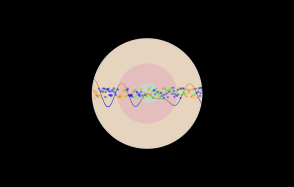
Using advanced numerical modelling techniques, this study shows that the accretion of fragments of oceanic crust at the base of the upper plate is responsible for vertical oscillations at the surface of several hundred metres with a periodicity of a few million years (as if the surface above the subductions were ‘breathing’ slowly and regularly). This ‘long-term’ signal is virtually undetectable by the methods commonly used to measure these vertical movements (e.g. GPS, study of marine terraces) and is superimposed on the ‘short-term’ vertical movements triggered during the seismic cycle.

These results therefore show the importance of studying topographic variations along active margins in order to identify these accretion episodes and constrain frictional properties along the subduction plane.

Bloc synthétisant les résultats de modèles numériques de subduction qui prédisent un soulèvement périodique du domaine côtier en réponse à l’accrétion profonde de lambeaux de croûte océanique le long du plan de subduction.

Ref:

Latest news
Are the hidden currents of Ganymede’s ocean finally detectable?
A study conducted by researchers from the Institut de physique du globe de Paris (IPGP) and CNRS shows that the convection motions driving the hidden ...
Discovery of CO₂ hydrates off the coast of Mayotte: a unique site for studying carbon storage in the ocean
More than 120 CO₂ hydrate deposits were discovered at the Fer à Cheval site, 10 km east of Petite Terre (Mayotte), during the Geoflamme campaign co-le...
Publication of the IPGP 2025 Annual Report
The IPGP Annual Report, published in both French and English, aims to share with the widest possible audience our enthusiasm for the research carried ...
SOUFRIÈRE_50: a week to revisit fifty years of scientific progress and meet the challenges of 21st-century volcanology
Press Release - Fifty years after the 1976–1977 eruption of La Soufrière de Guadeloupe—an event that left a profound mark on Guadeloupe, as well as on...