
Citizen / General public
Researcher
Student / Future student
Company
Public partner
Journalist
Teacher / Pupil

The IPGP logo is now on Mars!
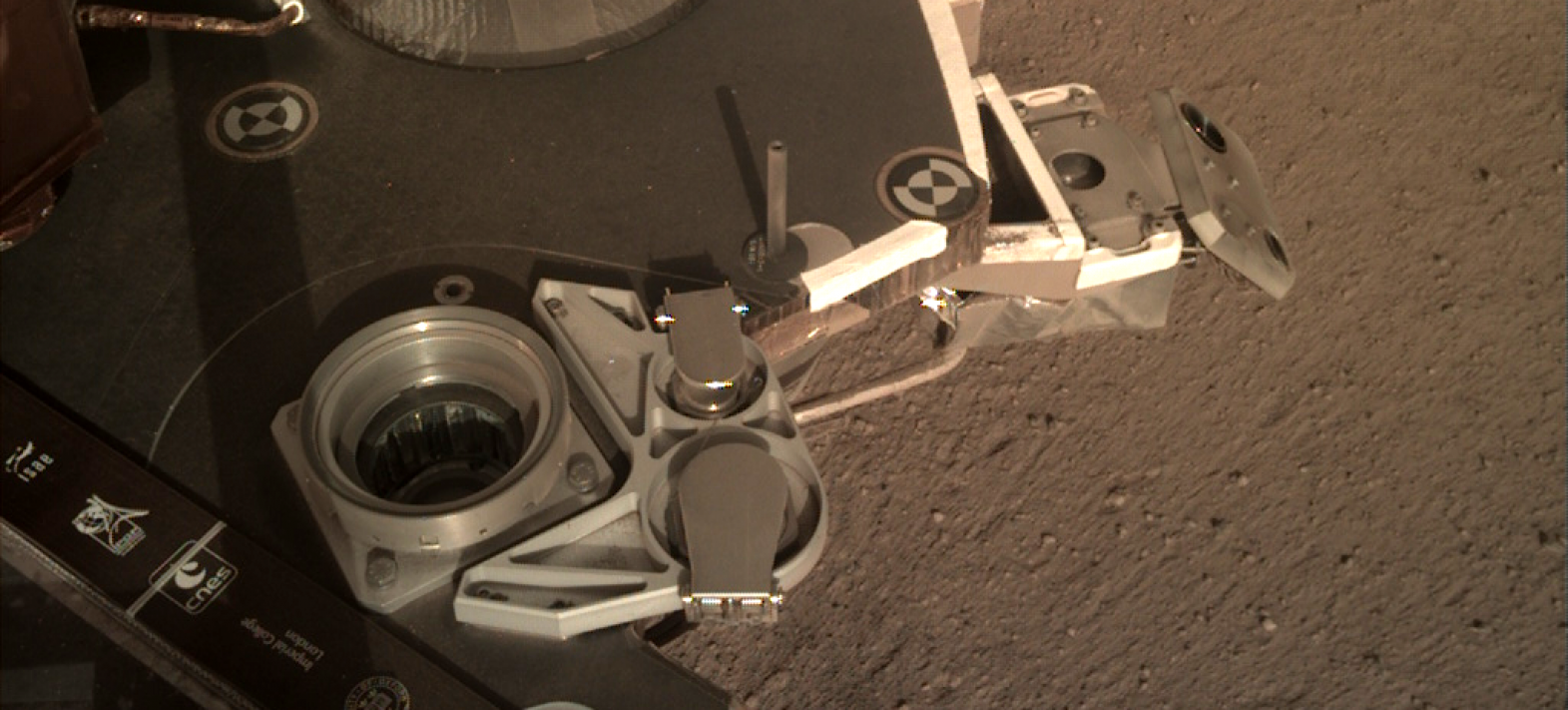
The IPGP logo is now on Mars!

Publication date: 26/11/2018

General public, Observatories, Press, Research

Related observatories : InSight Observatory

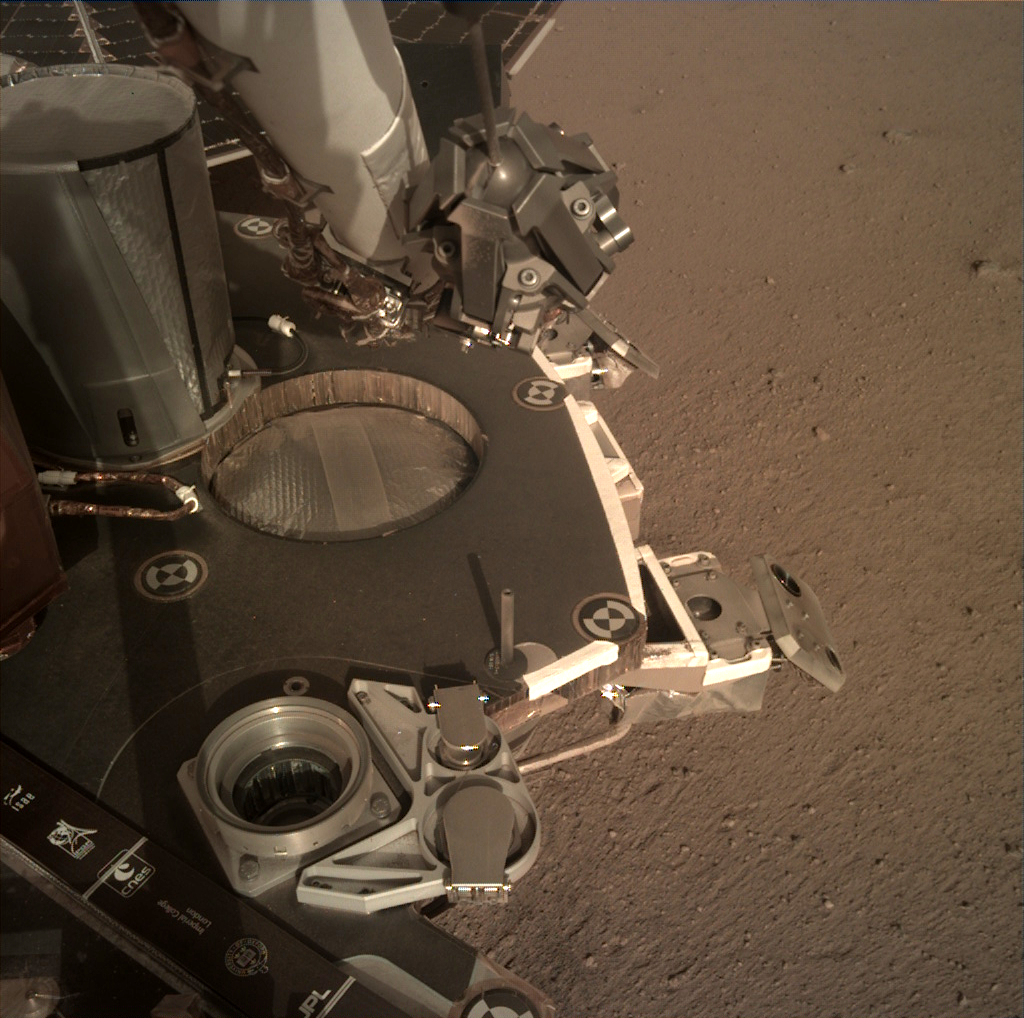
The logos of the space laboratories, including the Institut de Physique du Globe in Paris, that built the SEIS seismometer or produced its onboard software are beginning to appear on the flat cable linking the seismometer to its control electronics. The JPL, CNES, Oxford University, Imperial College London, Zurich Polytechnic, the Max Planck Institute for Solar System Research in Goettingen and ISAE-SUPAERO will all be represented on this cable.

© NASA

The IPGP is a space laboratory recognised by the CNES and brings together engineers, technicians, researchers and teacher-researchers from the CNRS, the University of Paris Diderot, the IPGP, the IGN and the University of La Réunion.

InSight is NASA’s 12th Discovery mission, and is completing its second week on Mars. The SEIS experiment will be deployed towards the end of 2018.

Latest news
CNES and IPGP to supply SPSS instrument as France’s contribution
 to U.S. Artemis IV mission
CNES and IPGP to supply SPSS instrument as France’s contribution
 to U.S. Artemis IV mission
The French space agency CNES (Centre National d’Études Spatiales) and the Institut de physique du globe de Paris – Université Paris Cité are proud to ...
International honours for Daniel Neuville in the field of glass science
Daniel Neuville, CNRS research director at IPGP, was awarded the Morey Prize in 2025 and was elected chair of the technical committees of the Internat...
Medieval tsunami revealed by giant coral blocks in the Caribbean
New scientific research has just shed light on a geological event that is as spectacular as it is forgotten: a tsunami of exceptional magnitude that i...
New insights into the history of Earth's atmosphere through neon and xenon isotopes.
A study reveals how mantle degassing and gas leakage into space have shaped the composition of the atmosphere over time.