Subduction zones are among the regions most exposed worldwide to large earthquakes and tsunamis. Yet, the long-term seismic behavior of some of these zones remains poorly understood. This is the case for the Ryukyu subduction zone, which extends between southern Japan and Taiwan. Although modern geodetic measurements suggest weak mechanical coupling along this plate boundary, geological and historical evidence points to the occurrence of major tsunamis, including the well-documented Meiwa tsunami of 1771.
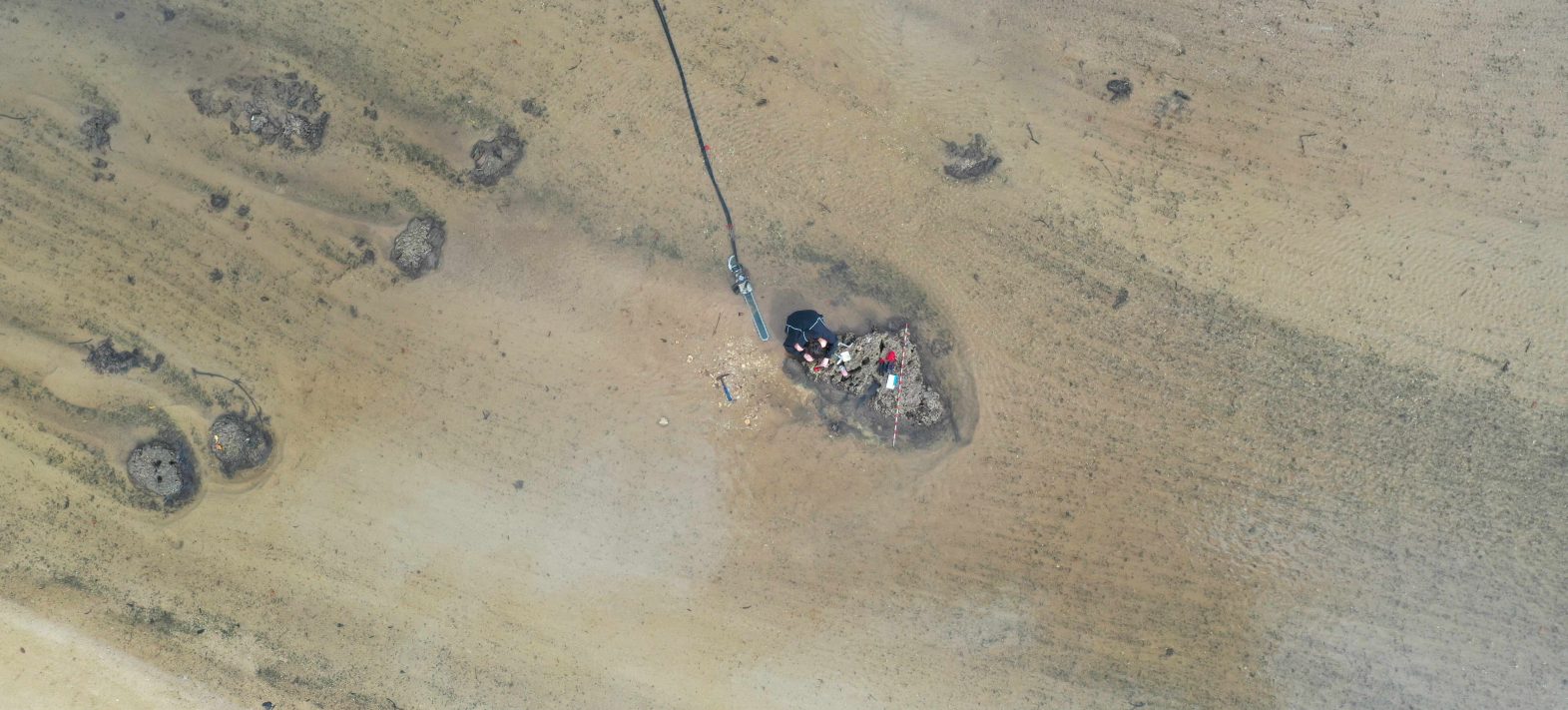
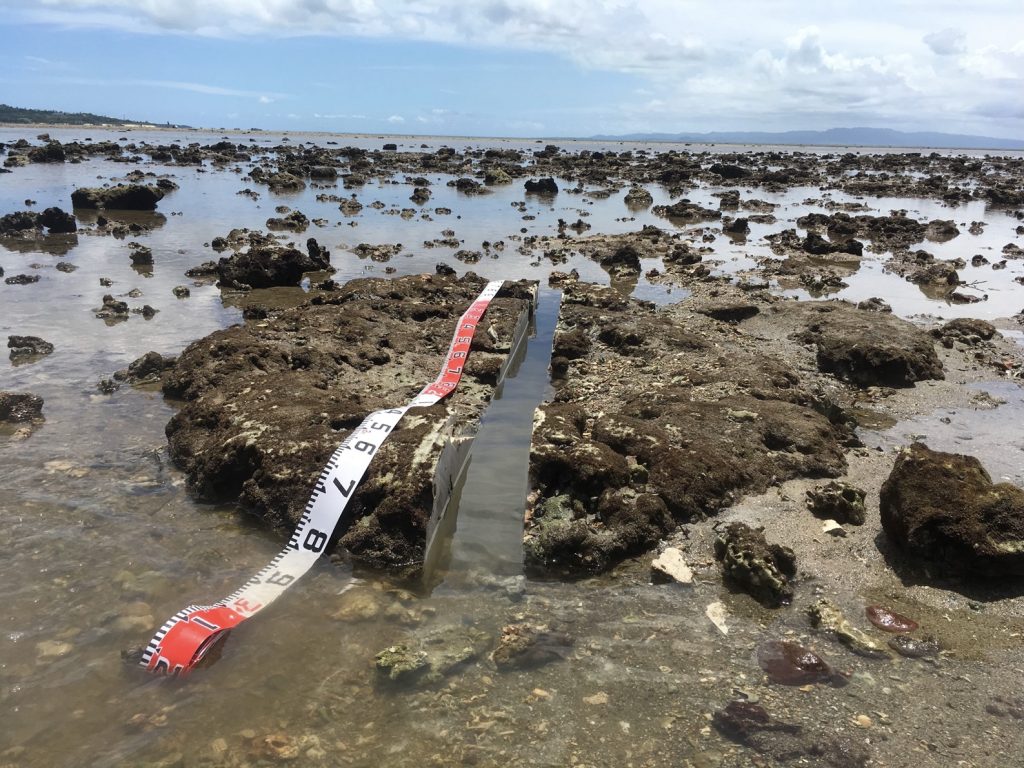
In a study published in Nature Communications, an international research team—including scientists from the Institut de physique du globe de Paris (IPGP)—reconstructed the seismic history of the Ryukyu subduction zone over an exceptional time span of about 5,000 years. This reconstruction is based on the analysis of fossil coral microatolls found on Ishigaki island, in the Ryukyu archipelago.
Corals as natural archives of major earthquakes
Microatolls are massive corals whose growth is tightly controlled by relative sea level. Their shape and internal layering record vertical ground movements with centimeter-scale precision, including those caused by earthquakes. By combining field mapping, geomorphological analysis, x-ray imaging, tomography, and uranium–thorium dating, the researchers were able to reconstruct a detailed, millennial-scale record of relative sea-level changes.
The results reveal several episodes of rapid island uplift, particularly between 5,000–4,000 and 3,000–2,000 years before present. These uplift events are interpreted as the geological signature of major subduction earthquakes.
Seismic supercycles spanning several millennia
The coral record points to the existence of seismic supercycles: long periods of relative quiescence punctuated by clusters of earthquakes, culminating in very large events capable of generating tsunamis. Elastic modeling suggests that some of these earthquakes may have reached magnitudes comparable to the largest events observed in other active subduction zones around the world.
Several of the uplift episodes identified in the corals coincide with tsunamis already documented in the geological and historical archives of the region, reinforcing the idea of a recurrent seismic cycle operating on timescales exceeding 2,000 years.
Major implications for earthquake and tsunami hazard assessment
These findings challenge the long-standing view that the Ryukyu subduction zone is largely aseismic. Instead, they demonstrate that this plate boundary is capable of producing major earthquakes with significant tsunami potential. Understanding such long-term seismic cycles is crucial for improving earthquake and tsunami hazard assessments in a densely populated and highly exposed region.
By shedding new light on the long-term dynamics of the Ryukyu subduction zone, this study highlights the key role of natural archives in understanding major geophysical hazards and underscores the importance of incorporating long timescales into risk mitigation strategies.
Source
Nature communications
Evidence of megathrust earthquakes and seismic supercycles in subtropical Japan from millennia-old coral microatolls