
Citizen / General public
Researcher
Student / Future student
Company
Public partner
Journalist
Teacher / Pupil

New insights into the history of Earth’s atmosphere through neon and xenon isotopes.

A study reveals how mantle degassing and gas leakage into space have shaped the composition of the atmosphere over time.
New insights into the history of Earth’s atmosphere through neon and xenon isotopes.

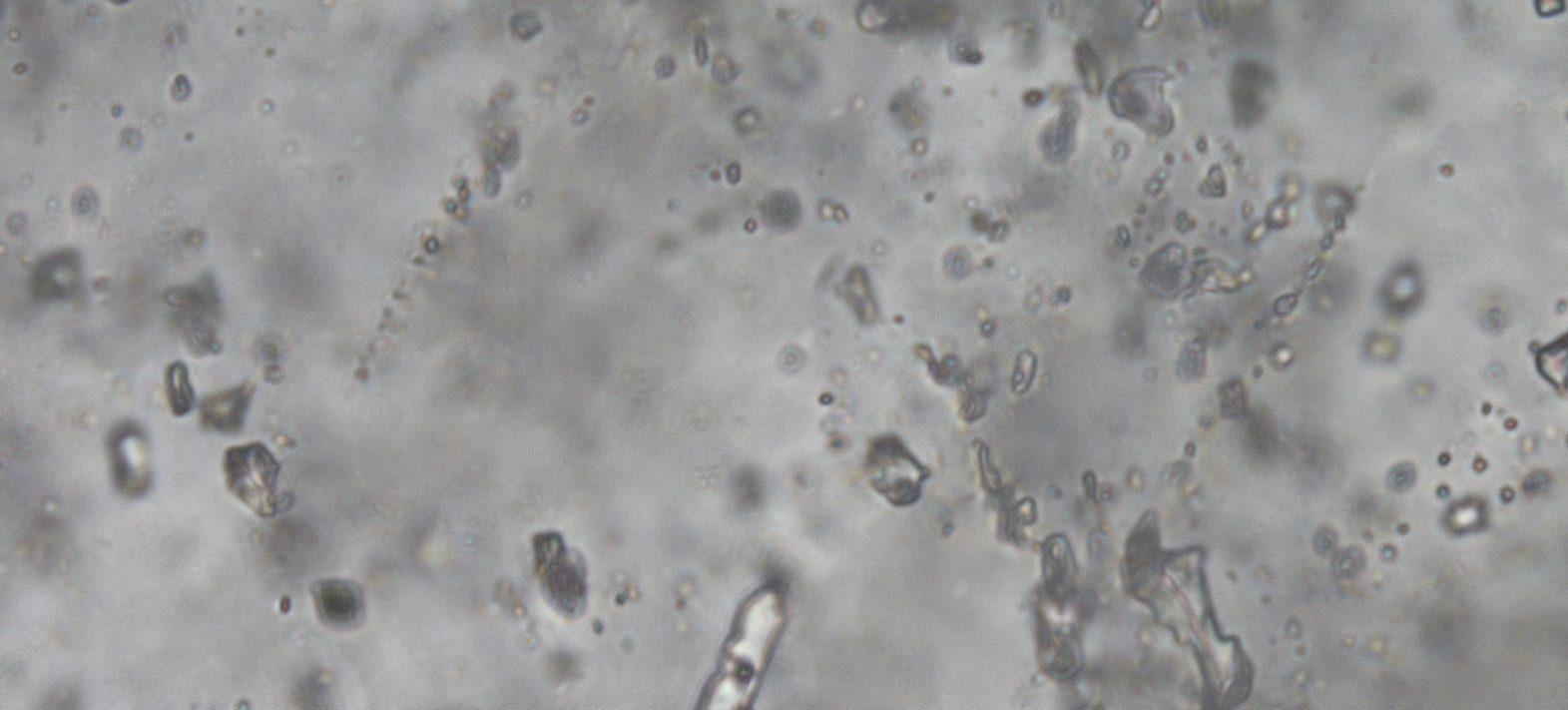
Fluid inclusions (including gas bubbles) in quartz samples dating back 2.7 billion years.

Publication date: 14/11/2025

Research

Tracking changes in the composition of the Earth’s atmosphere over geological time allows us to trace the history of our planet and the processes that have shaped it over more than 4 billion years. Two major mechanisms remain poorly understood for the earliest periods: mantle degassing and atmospheric escape into space.

In a study published in the journal Science Advances, a team of researchers from the Institut de Physique du Globe de Paris (Université Paris Cité, CNRS) and Washington University in St. Louis (United States) analyzed the isotopic and elemental composition of rare gases (neon, argon, krypton, and xenon) trapped in fluid inclusions of very ancient hydrothermal quartz from the Barberton greenstone belt (3.3 billion years old, South Africa) and the Fortescue Group (2.7 billion years old, Australia). These inclusions are veritable time capsules, recording the composition of the atmosphere at the time of their formation.

The results show that the isotopic ratio of neon (²⁰Ne/²²Ne) was slightly lower in the primitive atmosphere, reflecting intense mantle activity and significant degassing of solar neon during the first billion years of Earth’s history. Furthermore, the Archean atmosphere contained about twice as much xenon as today, confirming a gradual escape of xenon into space and thus a depletion of this gas over time. 

These observations provide new constraints on the physical and chemical processes that shaped the Earth’s atmosphere and shed light on major transitions, such as the Great Oxidation Event.These observations provide new constraints on the physical and chemical processes that shaped Earth’s atmosphere and shed light on major transitions, such as the Great Oxidation Event 2.3 billion years ago, when oxygen began to accumulate in the air.

Link  to the article : https://www.science.org/doi/10.1126/sciadv.aea3380

Latest news
Geoffrey C. P. King (1943 - 2026)
With great sadness that we are sharing the news that Geoffrey C. P. King, who worked at the Institut de physique du globe de Paris from 1995 until his...
Tribute from the Institut de Physique du Globe de Paris to Dr. Miguel Eduardo Bosch Blumenfeld (1959–2026)
The Institut de Physique du Globe de Paris pays tribute to Dr. Miguel Eduardo Bosch Blumenfeld, an esteemed geophysicist and distinguished alumnus of ...
From the first solids of the Solar System to planets: the decisive role of extreme and violent cooling
How do the first solid materials that give rise to planets emerge from the incandescent gas surrounding a young star? This transition from gas to soli...
Laëtitia Pantobe has been awarded the 2026 Thesis Prize by the French National Committee for Geodesy and Geophysics (CNFGG).
Laëtitia Pantobe, a PhD student in the Volcanic Systems team, successfully defended her thesis, "Identification and modelling of the physical processe...