Citizen / General public
Researcher
Student / Future student
Company
Public partner
Journalist
Teacher / Pupil

Razvan Caracas receives the Dana Medal from the Mineralogical Society of America

Razvan Caracas is a CNRS Senior Researcher in the Cosmochemistry, Astrophysics and Experimental Geochemistry team at the IPGP. He received the Dana Medal of the Mineralogical Society of America (MSA), of which he was also elected Fellow, and became a member of the Academia Europaea.
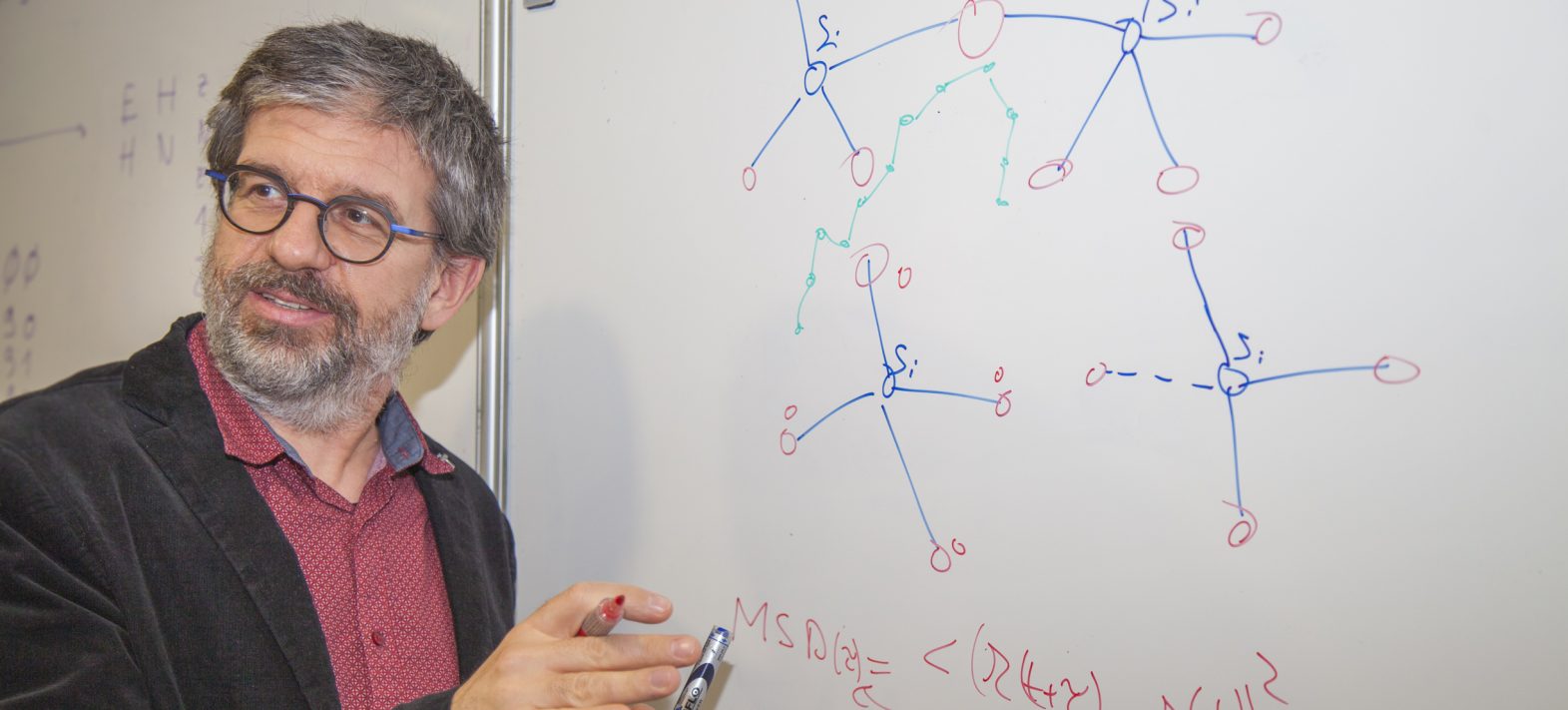
Razvan Caracas receives the Dana Medal from the Mineralogical Society of America

Publication date: 04/03/2024

Awards and Distinctions, Press

Razvan Caracas is a computational mineral physicist whose research spans a wide range of topics in planetary mineralogy, spanning from the protolunar disks to the inner structure of terrestrial planets and ice giants. His dual expertise in Geology and Materials Science, along with a solid background in algorithms and coding, has enabled him to consistently provide computational solutions to fundamental questions in mineralogy and geology.

Currently, he employs a combination of ab initio methods and machine learning algorithms to study supercritical fluids, silicate melts, and evaporation processes, with a special focus on magma oceans and atmosphere formation.

He was awarded an ERC Consolidator Grant IMPACT, where he studied the formation and evolution of the protolunar disk. He is the main developer of the Magmatomix/UMD package for complex analysis of molecular dynamics simulations and leader of the WURM project – a freely available repository of computed physical properties for minerals, with a special focus on Raman and infrared spectra.

He also has a strong outreach activity by organizing the itinerant international exhibition “MoonImpact – a geological story,” giving general lectures, and launching and promoting Mineralogy2022 – The Year of Mineralogy.

Latest news
What can the light from Vesta’s avalanches tell us?
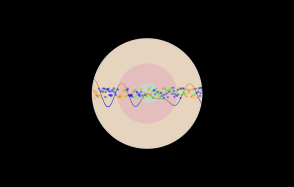
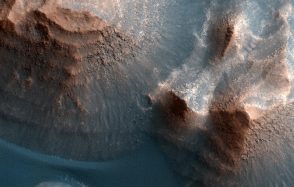
A study conducted at the Institut de Physique du Globe de Paris uses images from NASA’s Dawn mission and a Bayesian inversion of the Hapke photometric...
Cosmochemistry in the service of Alzheimer's disease diagnosis: copper reveals its isotopic secrets
A multidisciplinary study led by researchers at the Institut de Physique du Globe de Paris (IPGP), in collaboration with teams from the Faculty of Hea...
Are the hidden currents of Ganymede’s ocean finally detectable?
A study conducted by researchers from the Institut de physique du globe de Paris (IPGP) and CNRS shows that the convection motions driving the hidden ...
Discovery of CO₂ hydrates off the coast of Mayotte: a unique site for studying carbon storage in the ocean
More than 120 CO₂ hydrate deposits were discovered at the Fer à Cheval site, 10 km east of Petite Terre (Mayotte), during the Geoflamme campaign co-le...