In subduction zones, oceanic plates dive into the Earth’s mantle, carrying marine sediments with them. A key question in geochemistry is to determine the extent to which these recycled materials contribute to the formation of volcanic magmas.
The study conducted by Baoliang Wang, Frédéric Moynier, and Catherine Chauvel demonstrates that rubidium (Rb) isotopes retain traces of these sedimentary inputs all the way to the mantle source of Martinique’s lava, within the Lesser Antilles arc.
These results provide direct isotopic evidence of crustal recycling and open up new perspectives for quantifying chemical exchanges between the crust and the mantle.
A focus on Martinique and the Lesser Antilles arc
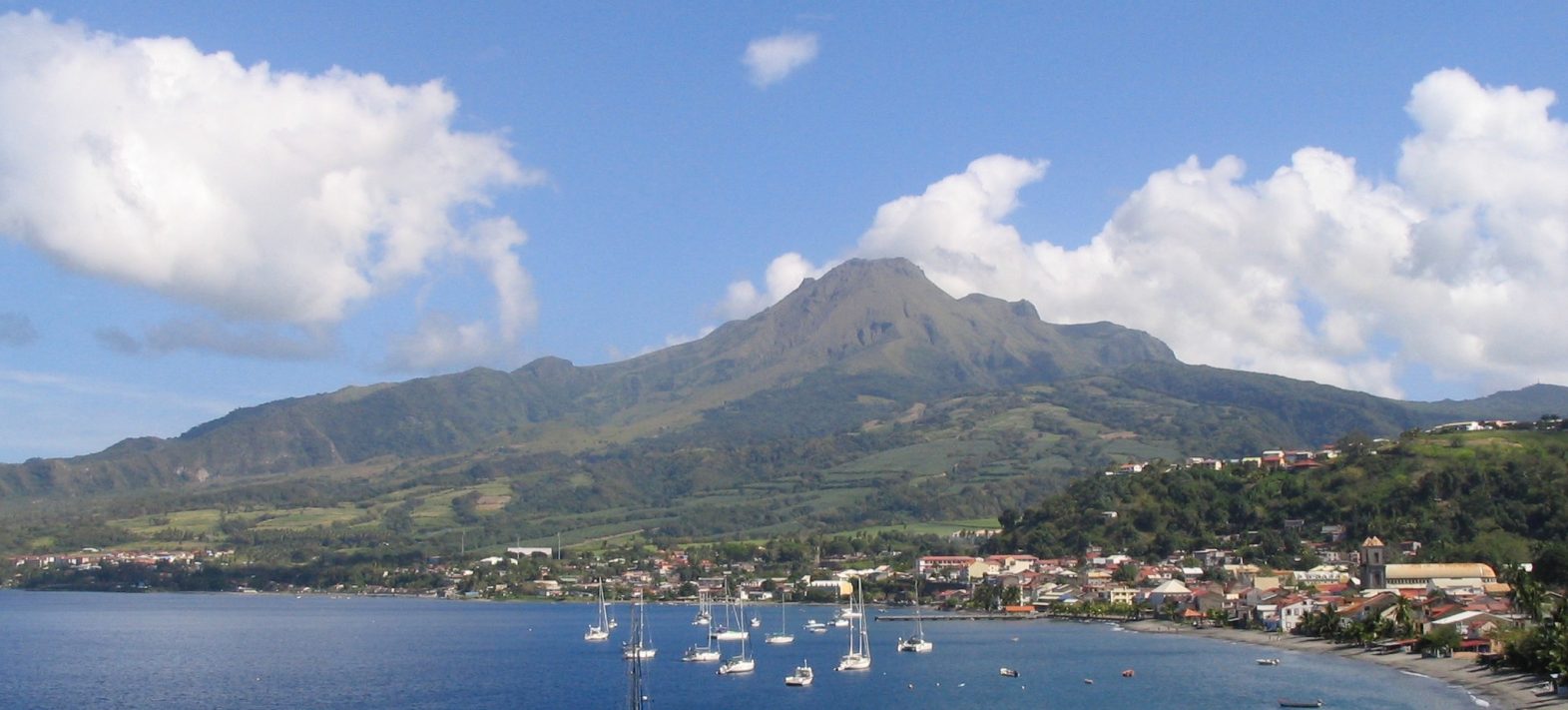
Martinique, located in the volcanic arc of the Lesser Antilles, is a privileged natural laboratory for studying subduction processes. The lava emitted in this context records the history of interactions between the subducting oceanic plate, the sediments it transports, and the overlying mantle.
Using an innovative isotopic approach, this study highlights the contribution of sedimentary materials to the source of Martinique’s magmas, helping to refine our understanding of crust-mantle dynamics in subduction zones.
Conducted entirely at the Institut de Physique du Globe de Paris (IPGP), this study is part of the IPGP’s research on isotopic geochemistry and subduction processes. Based on high-precision isotopic analyses, it provides new insights into exchanges between the crust and mantle and contributes to a better understanding of deep geochemical cycles. It also demonstrates the dynamism of the doctoral work carried out at the Institute.