

Multi-Messenger Observations and Modelling of Lunar Impact Flashes
Start: 01 October 2026
End: 30 September 2029
Supervisors :
Philippe Lognonné, Marco Delbo
Related teams :
Planetology and Space Sciences
Related themes :
Earth and Planetary Interiors, Natural Hazards
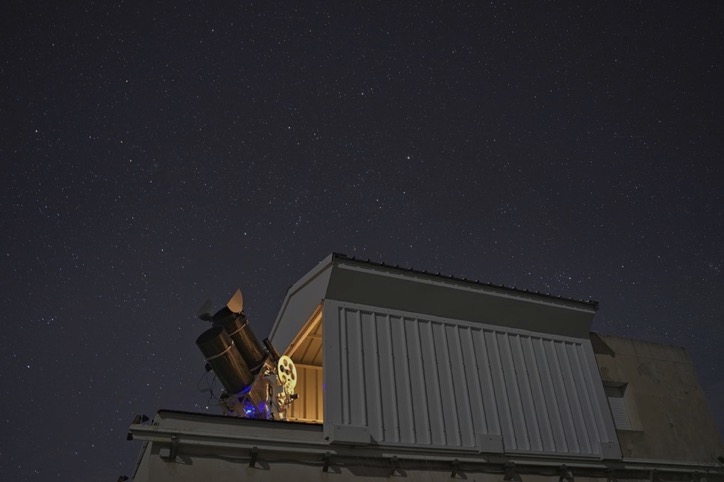
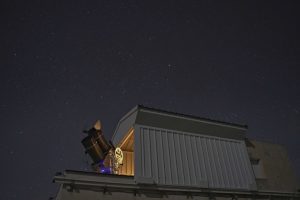
This PhD project focuses on lunar seismology and the study of meteoroid impacts on the Moon. It aims to exploit the first joint observations of impact-generated luminous flashes and lunar seismic signals. The deployment of new lunar seismic stations between 2026 and 2028 will open up unprecedented scientific opportunities. These instruments will operate in synergy with the ground-based TILT telescopes, dedicated to detecting lunar impact flashes and funded by the ERC LISTEN FLASH. The main objective is to better characterize impactors and improve our understanding of the Moon’s internal structure.
The first part of the PhD will focus on improving the detection of lunar impact flashes in the near-infrared. Observations, particularly during daytime, will be strongly affected by Earth’s atmospheric turbulence. Artificial intelligence and machine learning techniques will be developed to correct these distortions in real time. These methods will use high-resolution images of the lunar surface as references to enhance observational quality. This approach will increase the number of detected impacts and facilitate their association with seismic signals.
Joint observations will help characterize the lunar crust and quantify the meteoroid impact flux.
The second part will focus on the physical modeling of luminous flashes generated during impacts. These emissions mainly originate from lunar regolith that is melted and heated to high temperatures during the impact process. The models will incorporate melting processes, heat transfer, shock-wave propagation, and thermal radiation. They will be compared with photometric, thermal, seismic, and crater morphology measurements. The combined analysis of these observations will make it possible to estimate the mass, velocity, density, and potentially the composition of impactors. It will also provide insights into how impact energy is partitioned among melting, material ejection, crater formation, and seismic-wave generation. This research will build upon and extend existing hydrodynamic and seismological numerical models. It will be conducted within a collaborative framework involving notably IPGP, OCA, and JPL Ultimately, this PhD project will contribute to a better understanding of meteoroid impacts and the internal structure of the Moon.
© Pierre-Yves Froissart