
Citizen / General public
Researcher
Student / Future student
Company
Public partner
Journalist
Teacher / Pupil

Junior Professor position “Geology of exoplanets”

A junior professor position is open to recruitment by Université Paris Cité for an assignment at the Institut de Physique du Globe de Paris on the theme of “the geology of exoplanets”
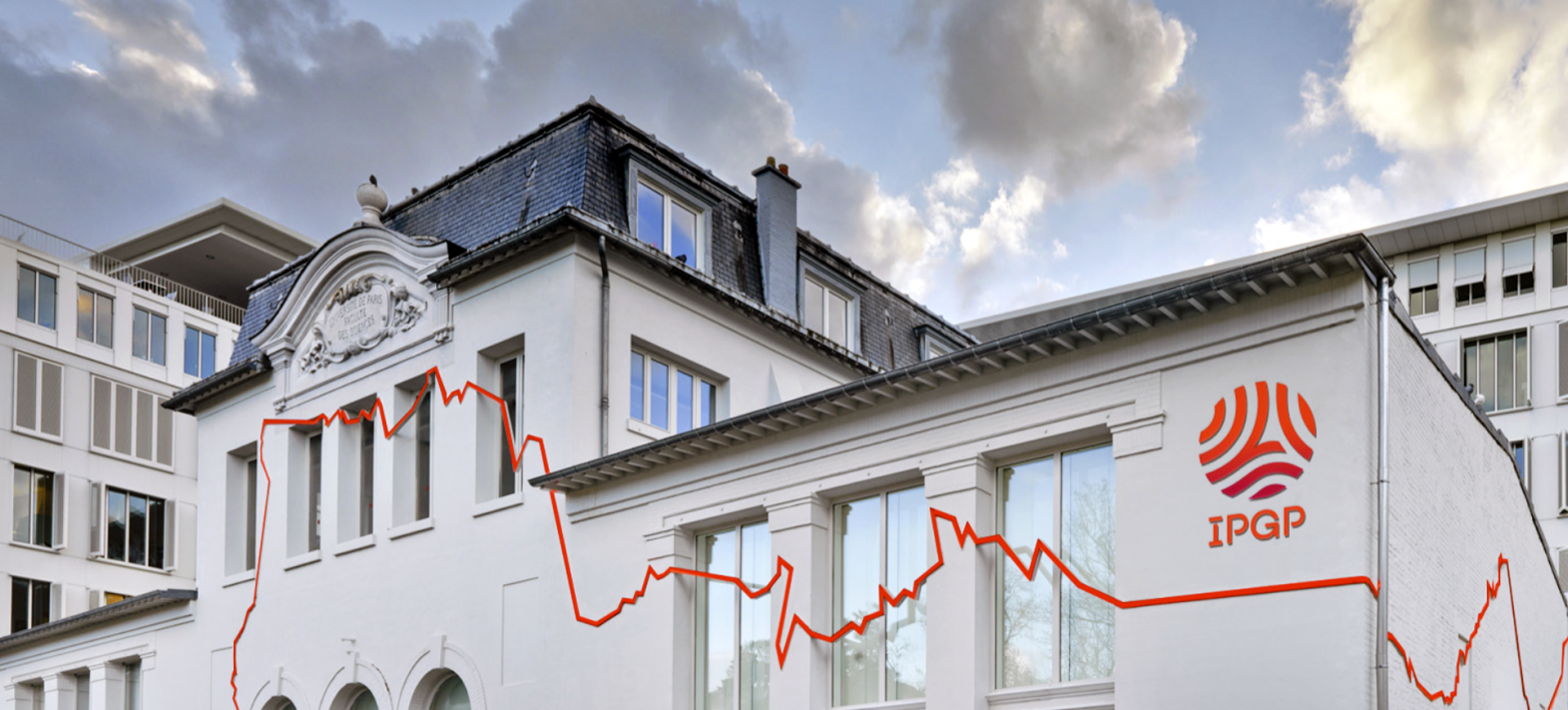
Junior Professor position “Geology of exoplanets”

Publication date: 16/05/2025

General public, Institute Life

A new field of research at the interface of several scientific fields is opening up for the study of terrestrial exoplanets. These fields, often represented by researchers in separate institutes or laboratories, include: (i) astronomy-astrophysics (search for and identification of exoplanets, determination of their physical properties, spectroscopy of their atmospheres and stars, … ), (ii) cosmochemistry (physical and chemical processes in the protosolar nebula at the origin of the first solids and their accretion to form the first planetesimals), (iii) elemental and isotopic geochemistry (tracing physical and chemical processes during planetary accretion and differentiation, the different reservoirs and their interactions), (iv) high-temperature and high-pressure experimentation (composition and physical properties of silicate and metallic liquids and mineral phases that make up the surface and interior of an exoplanet of given composition or of the Earth, simulations of impacts and of metal-silicate differentiation), (v) geophysics (modeling of differentiation, convection and the evolution of planetary interiors).

The IPGP is home to leading researchers in each of these scientific fields (teams Cosmochemistry astrophysics experimental geophysics, Geological fluid dynamics, Planetology and space sciences, Lithosphere organosphere microbiosphere, Seismology) and to have developed collaborations within the Université Paris Cité with two astrophysics laboratories (APC Astroparticles and cosmology, and AIM the CEA astrophysics department) thanks to the UnivEarthS labex (2011-2024) and the HERMES InIdex (2025-2031). In recent years, the exoplanet theme has matured considerably at the IPGP, with the publication of a number of significant results, albeit still in a fairly independent way, mainly concerning the geophysics and atmosphere of sub-neptune terrestrial exo-planets.

With this recruitment, the IPGP is seeking to develop research on the “geology of exoplanets” at the highest level, at the interface between all these disciplines and by bringing in know-how that is lacking, such as numerical simulation, transit spectroscopy, machine learning, ab-initio simulation, geochemical and geophysical models, and their observable characteristics with current means of observation on the ground or in orbit.

The deadline for applications is 4pm on July 2, 2025, with a view to taking up the post in November 2025.

For further information, please contact Marc Chaussidon (IPGP Director, ).

Latest news
Cosmochemistry in the service of Alzheimer's disease diagnosis: copper reveals its isotopic secrets
A multidisciplinary study led by researchers at the Institut de Physique du Globe de Paris (IPGP), in collaboration with teams from the Faculty of Hea...
Are the hidden currents of Ganymede’s ocean finally detectable?
A study conducted by researchers from the Institut de physique du globe de Paris (IPGP) and CNRS shows that the convection motions driving the hidden ...
Discovery of CO₂ hydrates off the coast of Mayotte: a unique site for studying carbon storage in the ocean
More than 120 CO₂ hydrate deposits were discovered at the Fer à Cheval site, 10 km east of Petite Terre (Mayotte), during the Geoflamme campaign co-le...
Publication of the IPGP 2025 Annual Report
The IPGP Annual Report, published in both French and English, aims to share with the widest possible audience our enthusiasm for the research carried ...