
Citizen / General public
Researcher
Student / Future student
Company
Public partner
Journalist
Teacher / Pupil

The Institute receives a precious sample of lunar basalt from the Chinese Chang’e-5 mission
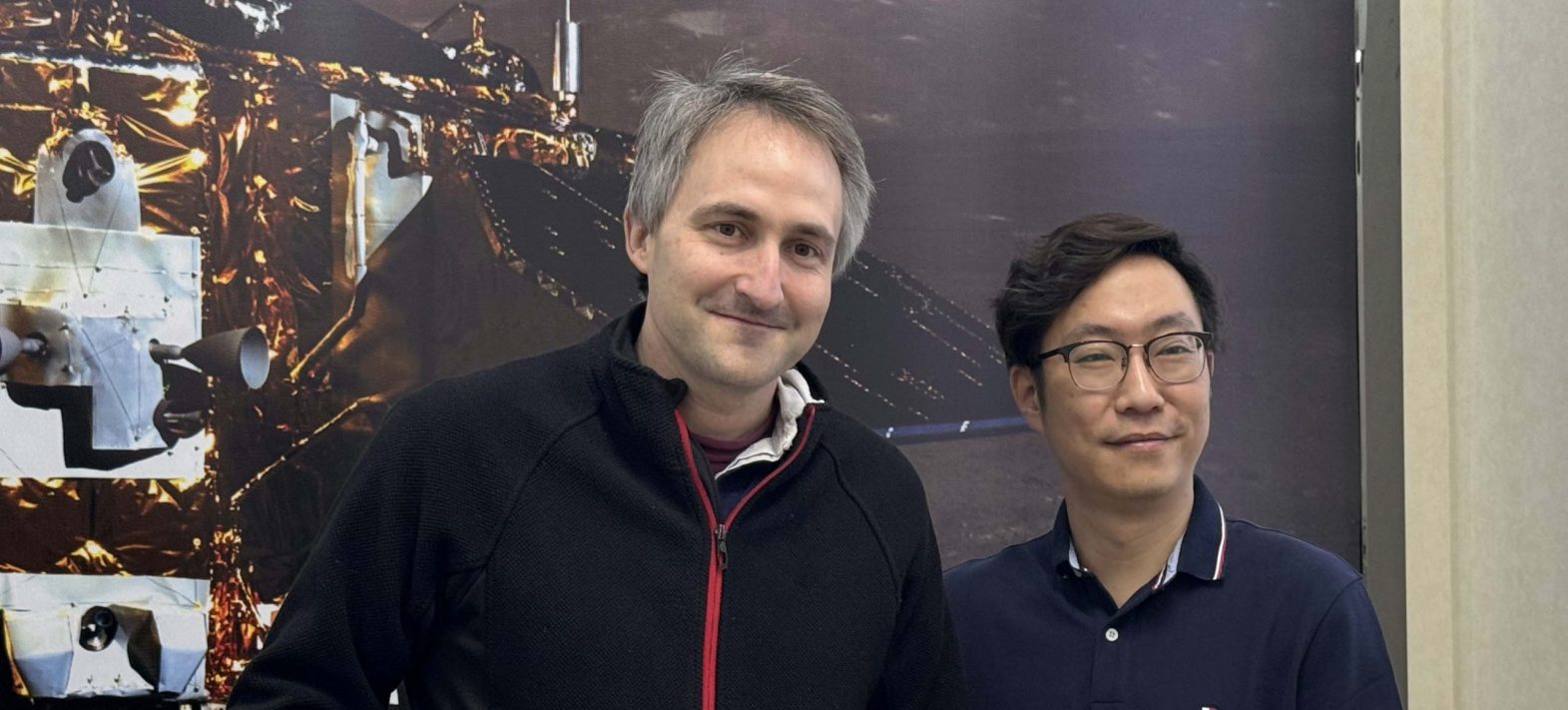
The Institute receives a precious sample of lunar basalt from the Chinese Chang’e-5 mission

Ceremony to hand over the sample at the National Astronomical Observatories in Beijing
Publication date: 17/04/2025

Events, Research

Frédéric Moynier has just been awarded a sample of lunar basalt collected by the Chinese Chang’e-5 mission, following an international call for proposals issued by the China National Space Administration (CNSA). This is the very first sample from this mission to be attributed to a scientific institution outside China. It is the youngest known material from the Moon (2 billion years old).

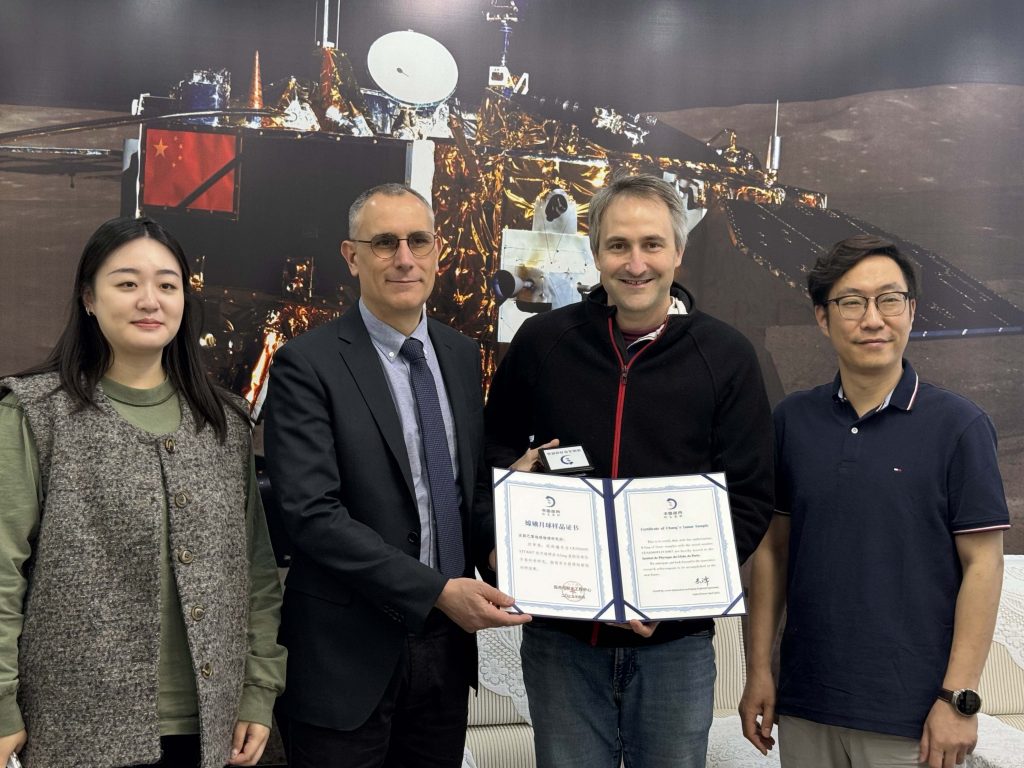
The sample was officially presented to Frédéric Moynier at a ceremony at the National Astronomical Observatories in Beijing, in the presence of Mr Mathieu Grialou, the CNES representative in Beijing.

This attribution bears witness to the international recognition of the IPGP’s expertise in the study of planetary bodies and extraterrestrial matter.

Two other samples from the same Chang’e-5 mission were symbolically offered by President Xi Jinping to President Emmanuel Macron during a state visit to China. These two samples, supplied in sealed enclosures that may have preserved lunar birds, have been preserved by the Museum National d’Histoire Naturelle de Paris (MNHN) in a under controlled atmosphere chamber. They will shortly be transferred temporarily to the IPGP to extract the volatiles in a new room designed for the study of extraterrestrial samples and financed by the CNES.

Official handover of the sample to Frédéric Moynier at a ceremony at the National Astronomical Observatories in Beijing in the presence of Mr Mathieu Grialou, CNES representative in Beijing.
Latest news
Frédéric Moynier elected member of the Academia Europaea
Frédéric Moynier, professor at the Institut de physique du globe de Paris (IPGP) and Université Paris Cité, and Deputy Director for Research at IPGP, ...
Can we listen to Titan’s heartbeat?  Icequakes as a window into a hidden ocean.
Can we listen to Titan’s heartbeat? Icequakes as a window into a hidden ocean.
What lies beneath the surface of Titan, Saturn’s largest moon? This question is central to the upcoming Dragonfly mission, which will deploy a drone e...
Lithium isotopes unveil the hidden chemistry of Guadeloupe's volcanic waters
IPGP researchers present the first systematic lithium isotope survey of Guadeloupe's surface waters, revealing that a single small island can host a r...
Jean-Philippe Avouac appointed Director of IPGP
By decree of the President of the French Republic dated March 23, 2026, Jean-Philippe Avouac has been appointed Director of the Institut de physique d...