Afin d'être accessible au plus grand nombre, nous vous informons que vous avez la possibilité de modifier la taille d’affichage du contenu de notre site.
Pour cela, voici les commandes à reproduire à l'aide de votre clavier :
Zoom in
CTRL +
+
Zoom out
CTRL +
-
Reset to zero
CTRL +
0
Cosmochemistry in the service of Alzheimer’s disease diagnosis: copper reveals its isotopic secrets
A multidisciplinary study led by researchers at the Institut de Physique du Globe de Paris (IPGP), in collaboration with teams from the Faculty of Health at Université Paris Cité, Inserm, AP-HP (Lariboisière and Bichat hospitals) and the University of Melbourne, reports a major advance: the discovery of a copper isotopic signature in accessible biological fluids, paving the way for the identification of a potentially minimally invasive biomarker of Alzheimer's disease. This work, published in Alzheimer's & Dementia: Diagnosis, Assessment & Disease Monitoring (DADM), shows that the copper isotopic composition of blood and cerebrospinal fluid (CSF) is altered in patients and directly mirrors the cerebral amyloid burden.
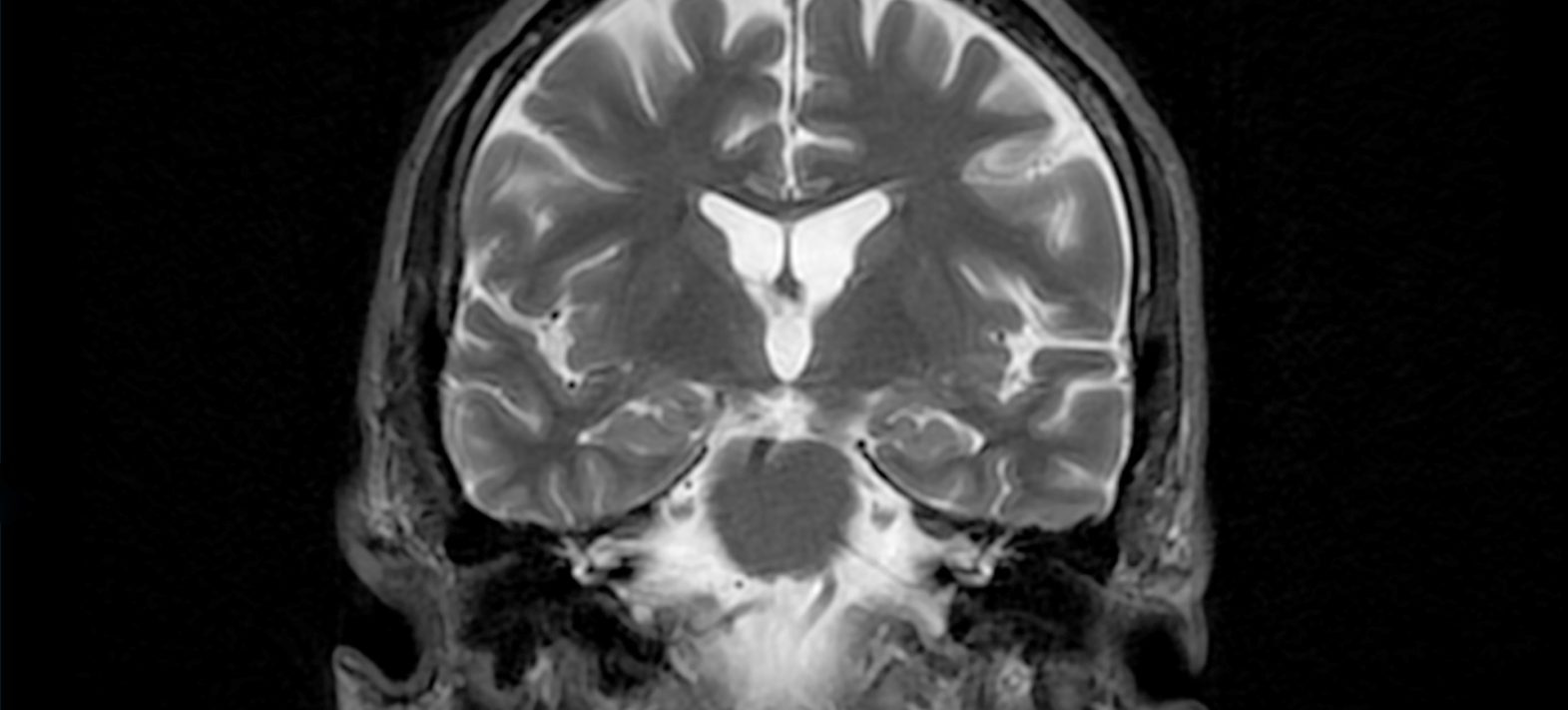
MRI of the brain of a patient with Alzheimer's disease. One of the consequences of Alzheimer's disease is the formation, in the brain, of extracellular plaques rich in metals: amyloid plaques and tau fibrils.
Alzheimer’s disease affects nearly 58 million people worldwide. In the absence of a curative treatment, early diagnosis is crucial to slowing its progression. Yet current tools — amyloid PET imaging and CSF analyses — remain costly, invasive or difficult to access. Against this backdrop, the identification of simple, minimally invasive biomarkers is an international priority.
From the brain to the fluids: a decisive advance
Copper, an element essential to brain function, accumulates in the amyloid plaques that are characteristic of the disease. Earlier work had shown that the brains of Alzheimer’s patients exhibit an isotopic anomaly, with a depletion in the heavy isotope (⁶⁵Cu). However, these findings relied solely on post-mortem analyses. The question therefore remained open: is this signature detectable in living patients, in accessible biological fluids?
A measurable and discriminating isotopic signature
This is precisely what Esther Lahoud, Frédéric Moynier and their colleagues demonstrate. Using high-precision analyses, they reveal two opposing signatures: an enrichment in the heavy isotope (⁶⁵Cu) in the CSF of Alzheimer’s patients, and a depletion in their serum. This asymmetry reflects a remodelling of copper metabolism between the brain and the periphery. These statistically robust differences make it possible to distinguish patients from control subjects. Moreover, they correlate with established markers of the pathology: the CSF Aβ42/40 ratio and the amyloid burden measured by PET. Copper isotopes thus emerge not only as an indicator of the presence of the disease, but also of its severity.
Towards a minimally invasive biomarker of Alzheimer’s disease
“These results show that the copper isotopic disturbances observed in the brains of Alzheimer’s patients leave a measurable imprint in accessible biological fluids,” explains Esther Lahoud, a PhD candidate at the IPGP and first author of the study. “Measuring copper isotopes in serum could ultimately provide a complementary, less invasive approach to monitoring amyloid pathology,” adds Frédéric Moynier, professor at the IPGP.
The study draws on two independent cohorts — one from Paris (Lariboisière Hospital) and the other from Australia (the AIBL cohort) — strengthening the robustness of the findings. Further work, on larger and longitudinal cohorts, will nonetheless be required to confirm the diagnostic potential of this biomarker.
Planetary Research: a new open-access journal for planetary sciences
Led by an international community of researchers, with strong involvement from IPGP scientists, the new journal Planetary Research offers an alternati...
What if the next stars of recycling were… bacteria?
A new comic book from IPGP takes us behind the scenes of metal bio-recovery. Featuring bacteria, precious metals and a generous dose of humour, it rev...
Mapping regolith migration on Phobos to support the MMX sample-return mission
Researchers from the Institut de Physique du Globe de Paris (IPGP), in collaboration with the Centro de Astrobiología (Spain) have published a new stu...
Lorraine Delaroque and Ines Ouar, two IPGP PhD students, receive awards at international conferences
Two doctoral students from the Planetology and Space Sciences team were recently recognized for their research at two international conferences.