
Citizen / General public
Researcher
Student / Future student
Company
Public partner
Journalist
Teacher / Pupil

Evidence for a marine carbon recycling mechanism in Earth’s mantle

Recent work by PhD student Zhengyu Long, under the supervision of Frédéric Moynier, and their colleagues at the Institut de Physique du Globe de Paris (IPGP/Université Paris Cité/CNRS) and the CNRS, has revealed a mechanism involved in Earth’s carbon cycle, linked to the subduction of oceanic plates. Their study, published in Science Advances, shows that carbonatites — rare volcanic rocks rich in carbonates — exhibit a distinctive isotopic signature, likely inherited from subducted oceanic crust. These findings suggest the existence of a marine carbon recycling process within Earth’s mantle that may contribute to the regulation of the global carbon cycle and the maintenance of life-supporting conditions on Earth.
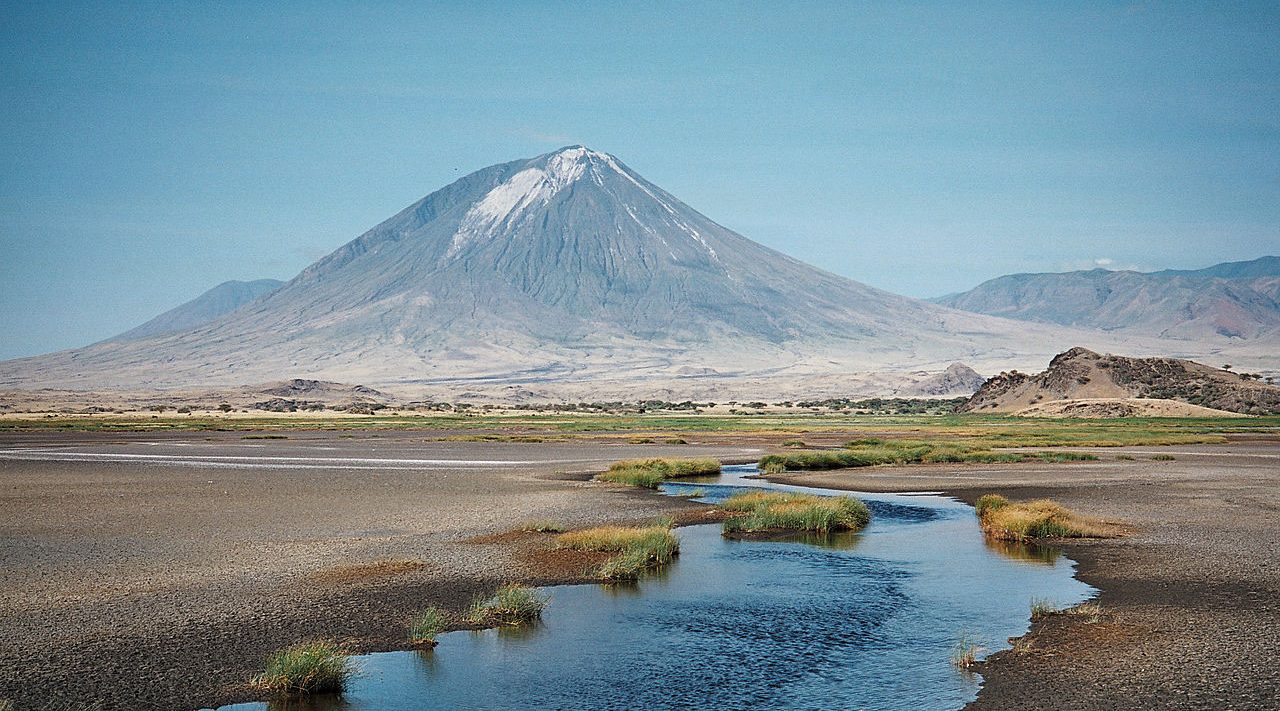
Evidence for a marine carbon recycling mechanism in Earth’s mantle

Modern carbonatitic volcanism at Ol Doinyo Lengai, Tanzania / @Wiki

Publication date: 16/06/2025

Press, Research

A process at the heart of deep carbon dynamics

Carbonate sediments descending into subduction zones are often interlayered with clay-rich strata or rest on altered igneous oceanic crust. By analyzing carbonatites from a range of geological environments – both oceanic and continental – spanning the past two billion years, the team observed that their potassium isotopic composition seems to reflect a mantle-derived origin rather than secondary magmatic processes.

These observations suggest that the recycling of marine carbonates, particularly through the subduction of altered oceanic crust, may play a key role in the dynamics of deep carbon reservoirs. The long-debated origin of carbonatites thus appears more closely linked to the partial melting of mantle reservoirs enriched in recycled carbonates.

New insights into the global carbon cycle

The carbonate inputs involved in this process could stem from a deep mantle plume or result from interaction between a plume and lithospheric mantle containing carbonates. Even very limited partial melting could produce carbonatitic magmas. This deep carbon transfer mechanism has likely been active for at least two billion years, including under conditions of hotter subduction.

This research provides new insights into the global carbon cycle. It highlights the role of carbonatites in mantle dynamics and underscores the probable contribution of subducted oceanic crust to carbon recycling – a process crucial to maintaining Earth’s surface conditions in balance.

Source :
Heavy potassium isotopes in carbonatites reveal oceanic crust subduction as the driver of deep carbon cycling

DOI: 10.1126/sciadv.adt102

Contacts :

IPGP : Pierre-Yves Clausse I I + 33 (0)6 51 67 84 83
CNRS : Bureau de presse I I +33 (0)1 44 96 51 51

Latest news
MAJIS on board JUICE: a key instrument for exploring Jupiter’s icy moons
As part of the team involved in the development and validation of the MAJIS instrument, the Paris Institute of Earth Physics is contributing to the sc...
Frédéric Moynier elected member of the Academia Europaea
Frédéric Moynier, professor at the Institut de physique du globe de Paris (IPGP) and Université Paris Cité, and Deputy Director for Research at IPGP, ...
Can we listen to Titan’s heartbeat?  Icequakes as a window into a hidden ocean.
Can we listen to Titan’s heartbeat? Icequakes as a window into a hidden ocean.
What lies beneath the surface of Titan, Saturn’s largest moon? This question is central to the upcoming Dragonfly mission, which will deploy a drone e...
Lithium isotopes unveil the hidden chemistry of Guadeloupe's volcanic waters
IPGP researchers present the first systematic lithium isotope survey of Guadeloupe's surface waters, revealing that a single small island can host a r...