
Citizen / General public
Researcher
Student / Future student
Company
Public partner
Journalist
Teacher / Pupil

Jean-Philippe Avouac awarded the Choose France label

The Institut de Physique du Globe de Paris (IPGP) is pleased to announce that Jean-Philippe Avouac has been awarded the Choose France label, a national initiative designed to attract world-class scientists to France and to support ambitious, high-impact research projects. This distinction accompanies his return to France and comes just weeks before he assumes his role as director of IPGP, effective April 1, 2026.

Jean-Philippe Avouac awarded the Choose France label

Publication date: 17/02/2026

Awards and Distinctions, Press, Research
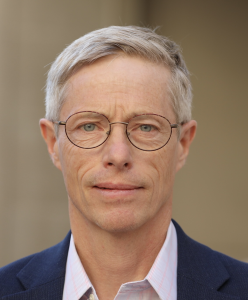
Jean-Philippe Avouac

Understanding and developing a probabilistic approach to major earthquakes
The project led by Jean-Philippe Avouac addresses one of the central challenges in earth sciences: improving our understanding of how seismic hazard evolves over time, particularly in regions capable of generating extreme earthquakes.
The aim is not to “predict” earthquakes in a deterministic sense—by specifying their exact time, location, and magnitude—but rather to significantly enhance probabilistic assessments of seismic hazard. This involves integrating the past history of faults, their mechanical behavior, and the buildup of elastic strain throughout the seismic cycle.

Two regions illustrate these challenges
The Cascadia subduction zone, in the Pacific Northwest of North America, long currently relatively quiet, is now known to have produced a major earthquake in 1700 that triggered a tsunami crossing the Pacific Ocean to Japan.
The Himalaya produced a magnitude 8.7 event in 1950, the largest continental earthquake ever recorded andhas relatively “quiet” since then, yet geodetic measurements show accumulating elastic strain that may eventually be released in major earthquakes. In this densely populated region, the human stakes are extremely high.

A physics-based approach
Over the past decade, Jean-Philippe Avouac has developed physics-based models to analyze how earthquake probabilities evolve across space and time. Part of this work has focused on induced seismicity related to human activities, such as fluid injection for geothermal energy production or CO₂ storage.
The Choose France–supported project will extend these methodological advances to natural seismicity, with the aim of refining seismic hazard assessment in major tectonically active regions around the world.
The funding will enable:
– the creation of a new research group upon his arrival at IPGP,
– the development of innovative tools to analyze the seismic cycle,
– the preparation of large-scale European research proposals, including applications to the European Research Council (ERC).

A scientific and institutional dynamic
The Choose France label recognizes Jean-Philippe Avouac’s scientific leadership while providing a strategic opportunity to advance this line of research.
“This project allows me to return to one of the central questions in earth science: how does the probability of extreme earthquakes change over time? It will enable me to establish a research group upon my arrival at IPGP and to explore new approaches, with the goal of pushing this work further in the years to come.”
As he prepares to lead IPGP, the award reinforces the institute’s commitment to advancing research on natural hazards, both within the institute and across the French scientific community.

About Choose France
Led by the French government, the Choose France label aims to strengthen the country’s scientific attractiveness by supporting the relocation of leading researchers and the development of high-potential, strategically important research projects.
Awarded on a selective basis, it serves as a clear vote of confidence in the scientific excellence of a project and its capacity to foster long-term research development.

Latest news
Komatiites reveal that Earth's surface water reached the deep mantle over 3.6 billion years ago
A new study led by Dr. Zheng-Yu Long and Prof. Frédéric Moynier, researchers at the Institut de Physique du Globe de Paris (IPGP/Université Paris Cité...
Satellites reveal irreversible damage in a major California aquifer
A study published in Proceedings of the National Academy of Sciences (PNAS), to which Kristel Chanard, Manon Dalaison and Jean-Philippe Avouac of the ...
Academic research: a key lever for addressing the water challenge in Africa... and elsewhere!
A new Nature Sustainability publication to which Essam Heggy (lecturer-researcher at IPGP) contributed, reveals how stronger support for African-focus...
A new isotopic clue reveals the origin of the asteroid responsible for the extinction of the dinosaurs
A study led by Georgy V. Makhatadze, a postdoctoral researcher at the Institut de physique du globe de Paris (Université Paris Cité / CNRS) under the ...