Citizen / General public
Researcher
Student / Future student
Company
Public partner
Journalist
Teacher / Pupil

Jordane Corbeau and Léa Bonnefoy win the L’Oréal – UNESCO “For Women in Science” Young Talent Award 2020
Jordane Corbeau and Léa Bonnefoy win the L’Oréal – UNESCO “For Women in Science” Young Talent Award 2020

Publication date: 09/10/2020

Awards and Distinctions, Institute Life, Press, Research

The Young Talent Prize rewards women researchers whose work is helping to build a better, more sustainable, more resilient and more inclusive world. This year, nearly 700 young women researchers applied. 35 Young Talents were selected by a jury of excellence. Originating from all over the world and carrying out their research in mainland France or the French overseas departments and territories, these doctoral and post-doctoral students are working in fields as varied as medicine, astronomy, physics and computer science.

No fewer than six doctoral and post-doctoral students from the University of Paris have been awarded this prestigious prize for their work in the sciences, environmental and earth sciences, and medicine: L’Oréal – UNESCO fellowships: six researchers from the University of Paris are winners

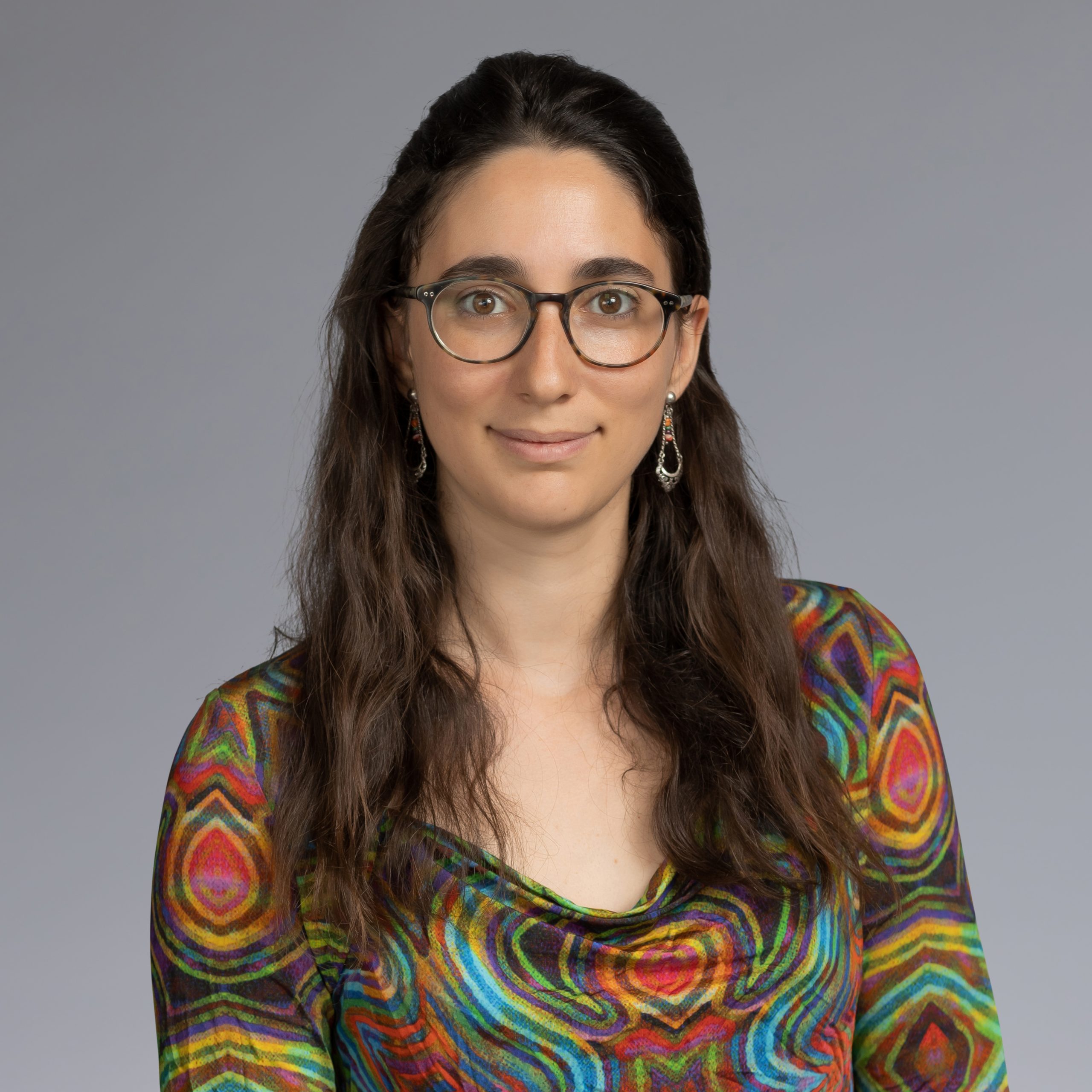
The IPGP is delighted to welcome two of them: Jordane Corbeau, a post-doctoral researcher in the marine geosciences team at the Martinique Volcanological and Seismological Observatory (OVSM), and Léa Bonnefoy, who will start a post-doctorate in November in the planetology and space sciences team, in collaboration with Cornell University.

Jordane Corbeau

Summary of thesis: “In France, the only active subduction zone is located along the arc of the Lesser Antilles. Unlike the Pacific subduction zones, which have been extensively studied, the Lesser Antilles subduction zone suffers from a considerable lack of instrumentation and multi-scale studies. The main aim of the scientific project that I am setting up at the Observatoire Volcanologique et Sismologique de Martinique (OVSM-IPGP) is to improve our understanding of the dynamics of subduction in the Lesser Antilles and to estimate the seismic hazard, with a view to providing some answers to the big question: “Can subduction in the Lesser Antilles produce major earthquakes?

L'Oréal Foundation

To do this, I am analysing the spatio-temporal variations in seismicity and geodetic measurements of the Lesser Antilles arc, with a view to identifying potential precursors of a major rupture. I am calculating the mechanisms at the focus of the largest earthquakes in order to constrain the mode of deformation of the subduction plane and highlight coupling zones. In addition to the scientific advances in our understanding of the dynamics of subduction zones and the seismic cycle, this work will help to assess the seismic hazard for the region, and will be used to prevent seismic risks to local populations.

L'Oréal Foundation

Léa Bonnefoy

Summary of thesis: “Saturn’s moons have undergone divergent evolutions, linked in particular to their interactions with the rings. Part of this history remains hidden beneath the surface, inaccessible to most observation methods. The aim of my thesis is to characterise the subsurfaces of Saturn’s moons without an atmosphere, particularly the three largest: Rhea, Dione and Japet. To do this, I’m using microwave radiometry, which makes it possible to measure the subsurface temperature remotely. The radiometer on the Cassini probe, which explored the Saturn system for 13 years, sounded several metres deep. I compared these data with simulated temperatures, revealing a 5 to 15 metre layer of porous water ice, similar to snow.

The study also revealed regional structural anomalies on Rhea and Dione. Each wavelength probes a different depth. I therefore supplemented the Cassini data on Japet with observations from radio telescopes on Earth, at wavelengths of 1 mm to 3 cm. The resulting microwave spectrum enables us to measure variations in structure and composition with depth. Studying the icy surfaces of the Solar System is particularly important in the context of the space missions being prepared by the European Space Agency (ESA) and the US National Aeronautics and Space Administration (NASA), which will explore the moons of Jupiter and Saturn. Understanding the composition and structure beneath the surface provides clues to the formation and evolution of these moons.”

Latest news
Are the hidden currents of Ganymede’s ocean finally detectable?
A study conducted by researchers from the Institut de physique du globe de Paris (IPGP) and CNRS shows that the convection motions driving the hidden ...
Discovery of CO₂ hydrates off the coast of Mayotte: a unique site for studying carbon storage in the ocean
More than 120 CO₂ hydrate deposits were discovered at the Fer à Cheval site, 10 km east of Petite Terre (Mayotte), during the Geoflamme campaign co-le...
Publication of the IPGP 2025 Annual Report
The IPGP Annual Report, published in both French and English, aims to share with the widest possible audience our enthusiasm for the research carried ...
SOUFRIÈRE_50: a week to revisit fifty years of scientific progress and meet the challenges of 21st-century volcanology
Press Release - Fifty years after the 1976–1977 eruption of La Soufrière de Guadeloupe—an event that left a profound mark on Guadeloupe, as well as on...